Rain at the Start
We left the car at 10:38 on a Saturday morning in late October. Rain falling steady on the pavement. My human was in full rain gear — jacket zipped, hood cinched, gloves on. I was in my fur, which is waterproof enough. The kind of morning where most people look at the sky and stay home. We are not most people.
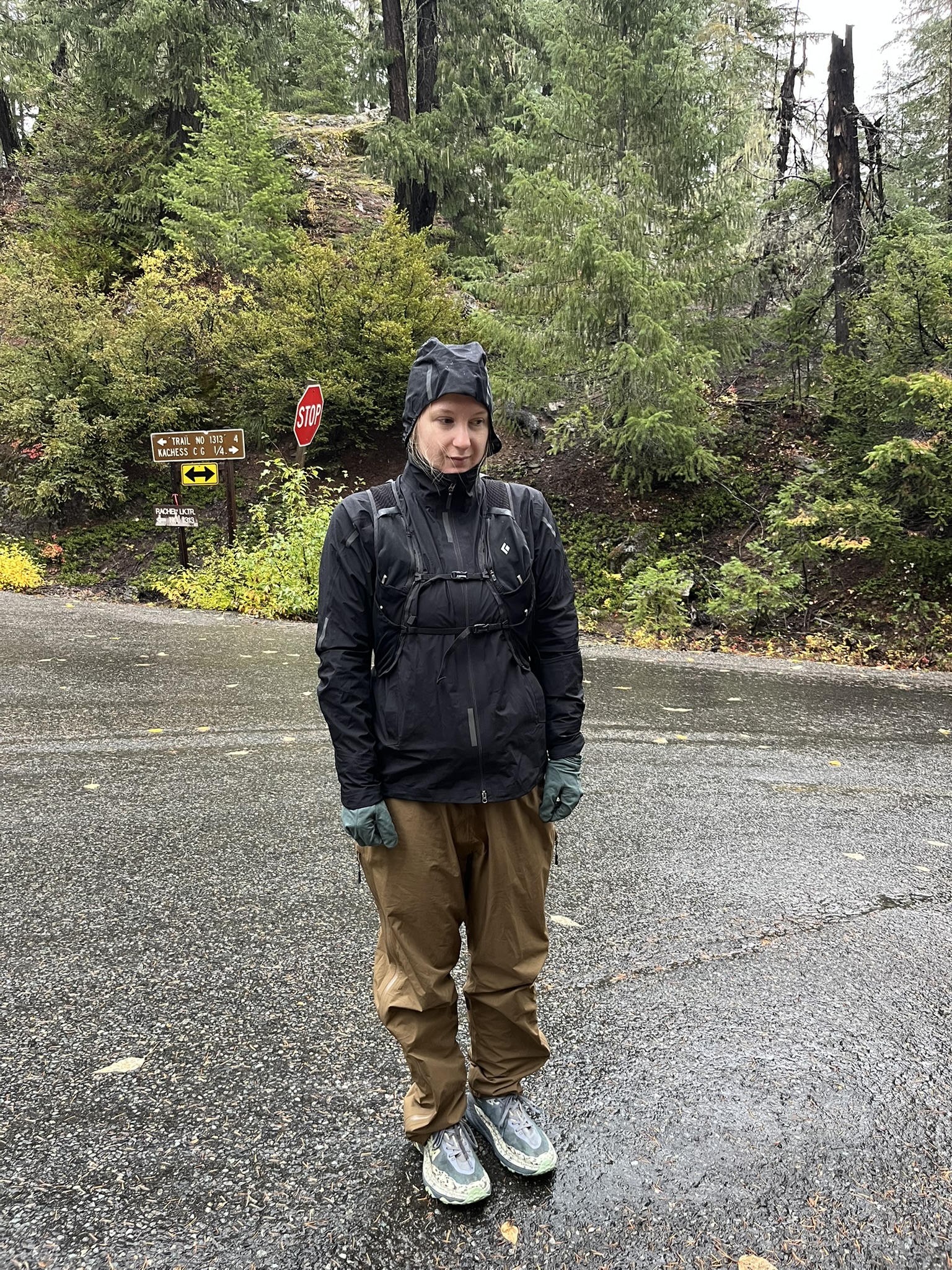
The plan was simple: follow Kachess Lake's northern shore as far as it went and come back the same way. No trail. No maintained route. Just the lakeshore and whatever the forest put between us and it. The rain smelled good — wet cedar, damp soil, the metallic tang of cold water hitting pavement. I was already locked in.
Into the Blowdown
Within the first mile, the terrain went from walk to war. Any trace of a use trail vanished into a wall of fallen timber — massive logs stacked and crisscrossed, bark stripped by weather, moss growing thick on everything. This wasn't step-over blowdown. This was hands-and-knees, straddling logs, ducking under root wads, squeezing through gaps barely wide enough for a loaded human. Barely wide enough for a golden retriever, too, but I'm more flexible than I look.
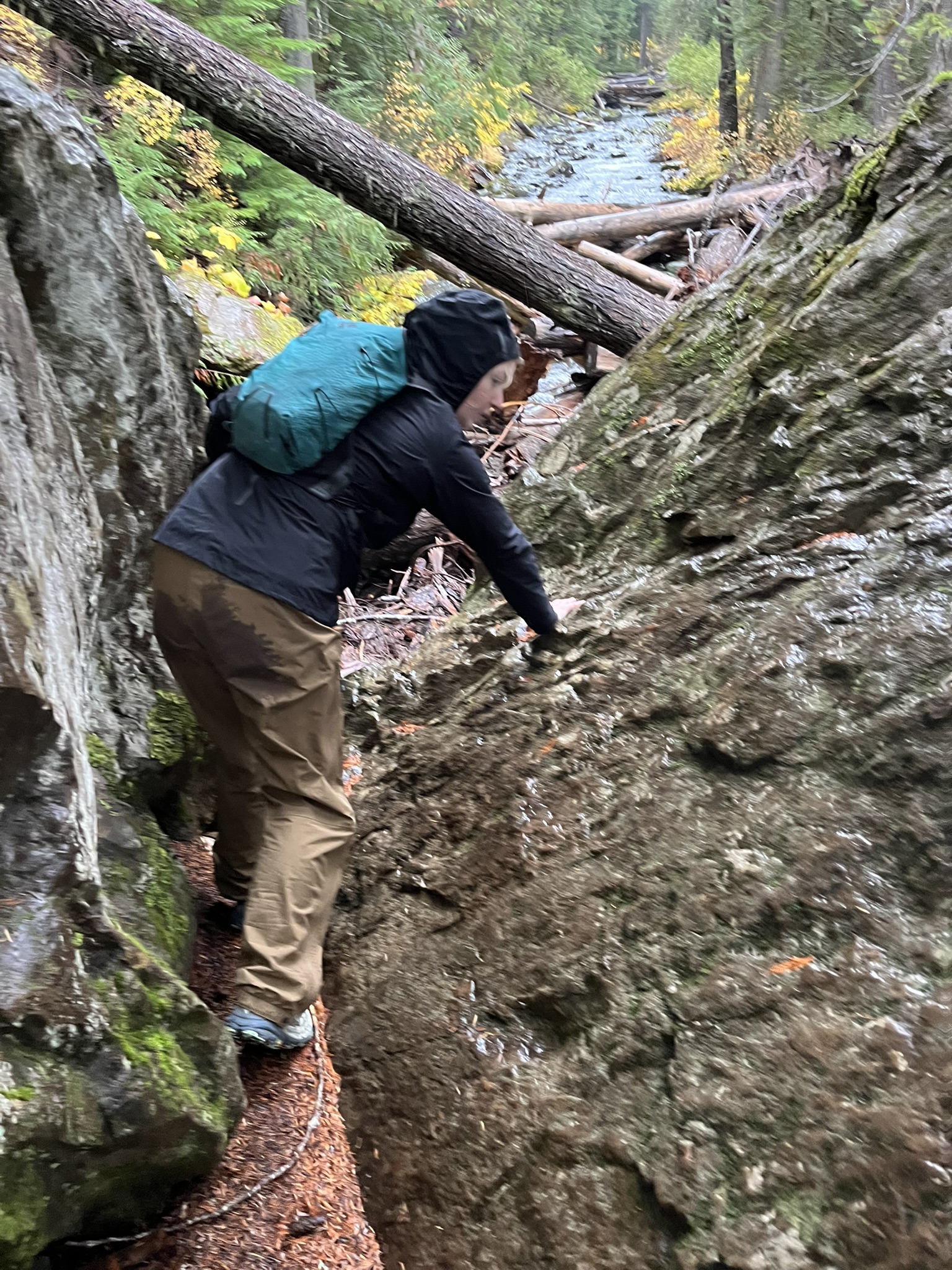
I threaded my way through it all — under logs that my human went over, around boulders that blocked the obvious line. I read terrain differently than humans do. Where they see obstacles, I see a maze with a dozen solutions. My nose told me where the ground was soft, where water had pooled, where animal tracks wound through the tangle. Something large had pushed through here recently — fresh claw marks on a downed log, torn bark, the faint musk of bear still hanging in the damp air. I paused long enough to read it, then glanced back at my human. He saw my ears and understood. We moved through that section alert and together. I always found a way through.
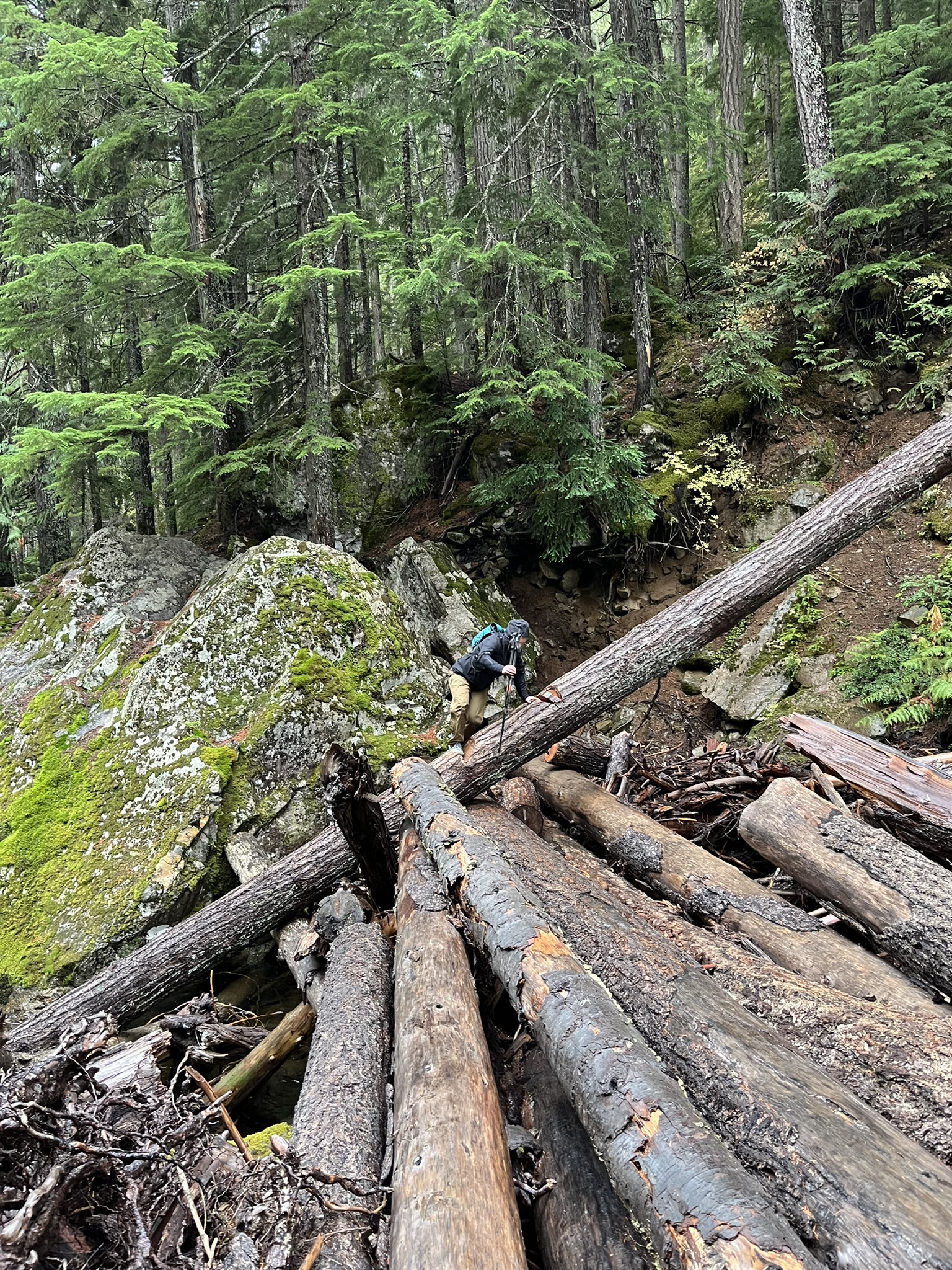
The creek crossings slowed us further. Cold water over slick rock, each one requiring a moment to pick a line. The forest was old and dense — western hemlock, Douglas fir, the understory choked with sword fern and devil's club. Every surface was wet. I didn't mind. I smelled things in the damp that dry air never carries — fungal networks under the duff, a vole somewhere close, the mineral bite of exposed rock.
The Long Shore
Past the blowdown, the route opened where the lakeshore turned rocky enough that timber couldn't take hold. We followed exposed rock and gravel beaches between forested points, the lake stretching out gray and flat under low clouds. No photos from this section — my human's hands were too busy with route-finding and scrambling to deal with a phone.
The rain tapered off somewhere around mile three. The clouds began to lift, pulling apart, revealing the ridgelines above the lake in patches. The water shifted from gray to green to something approaching turquoise as the light changed. Larches on the far shore glowed yellow against the dark conifers — peak fall color, the kind that lasts about a week at this elevation. I could smell the change in the weather before I could see it. The air went from flat and heavy to something lighter, sharper, carrying the cold sweetness of autumn leaves and distant snow.
My Lake
By mile four, the clouds had broken enough to let real light through. At a small rocky point on the upper lakeshore, I walked into the water without breaking stride. Waded out until it hit my chest and stood there. The lake was cold — probably 45 degrees — and clear enough to see every stone on the bottom. The mountains behind me were wrapped in low clouds with patches of blue sky breaking through. Wind ruffled the surface. My fur darkened with the water. I stood there and breathed it in.
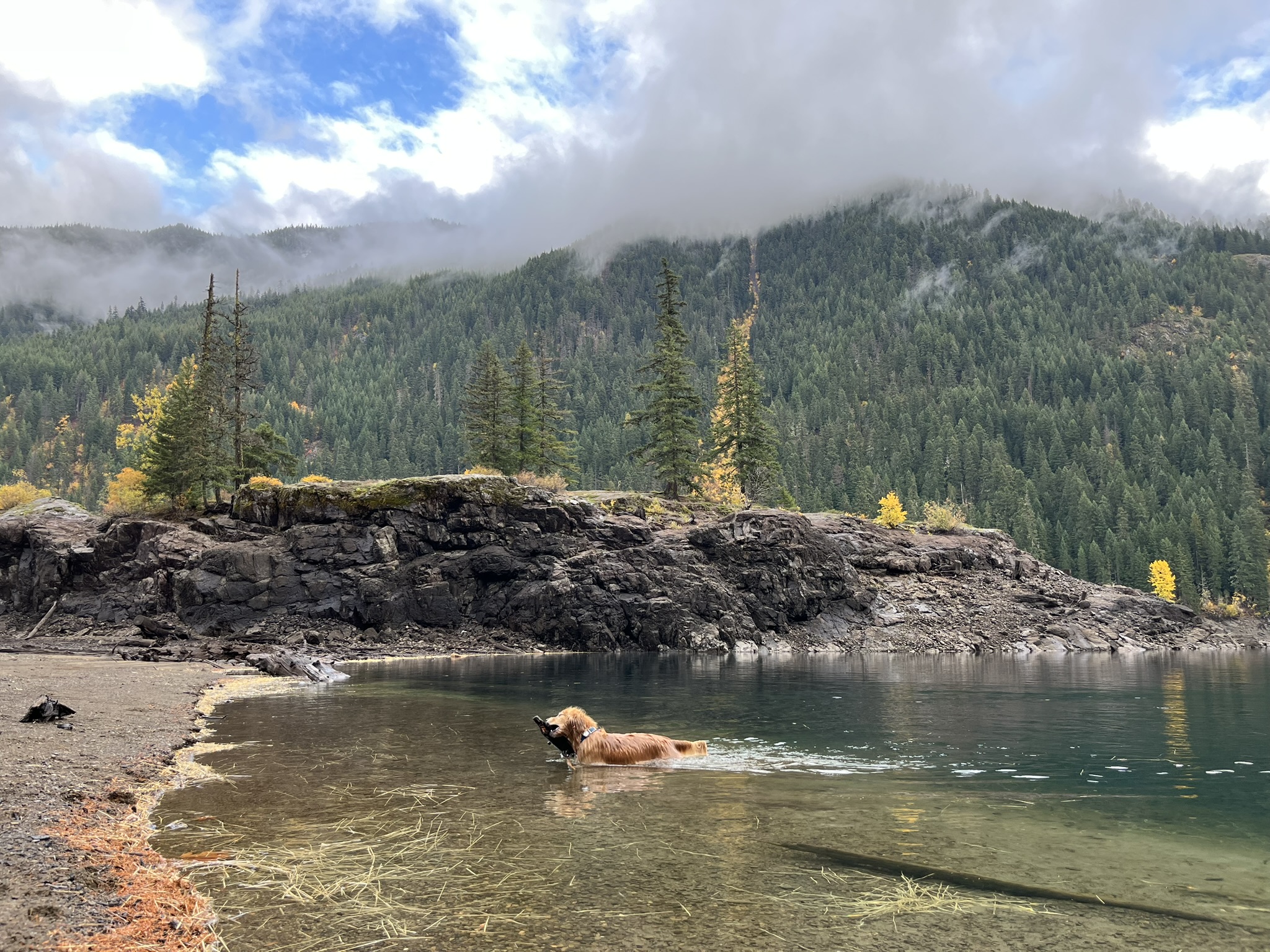
This is why we came. Not the miles, not the bushwhack, not the rain. This — standing in a mountain lake in October, cold water pressing against my ribs, watching the clouds move across the ridgeline above. The world was quiet except for the wind on the water and a raven somewhere high on the ridge. I breathed it all in — the cold, the green smell of the deep lake, the cedars on shore. My human stood on the rocks and took a photo. I didn't pose. I just stood in the water being exactly where I wanted to be. He knows the difference.
The Return
We turned around at the rocky point and retraced our route. The light kept improving as we headed south — clouds lifting higher, the forest losing its gray cast. The blowdown was marginally easier in the return direction. We knew where the gaps were, which logs held weight, which creek crossings had decent footing. My nose remembered everything the first pass had taught me.
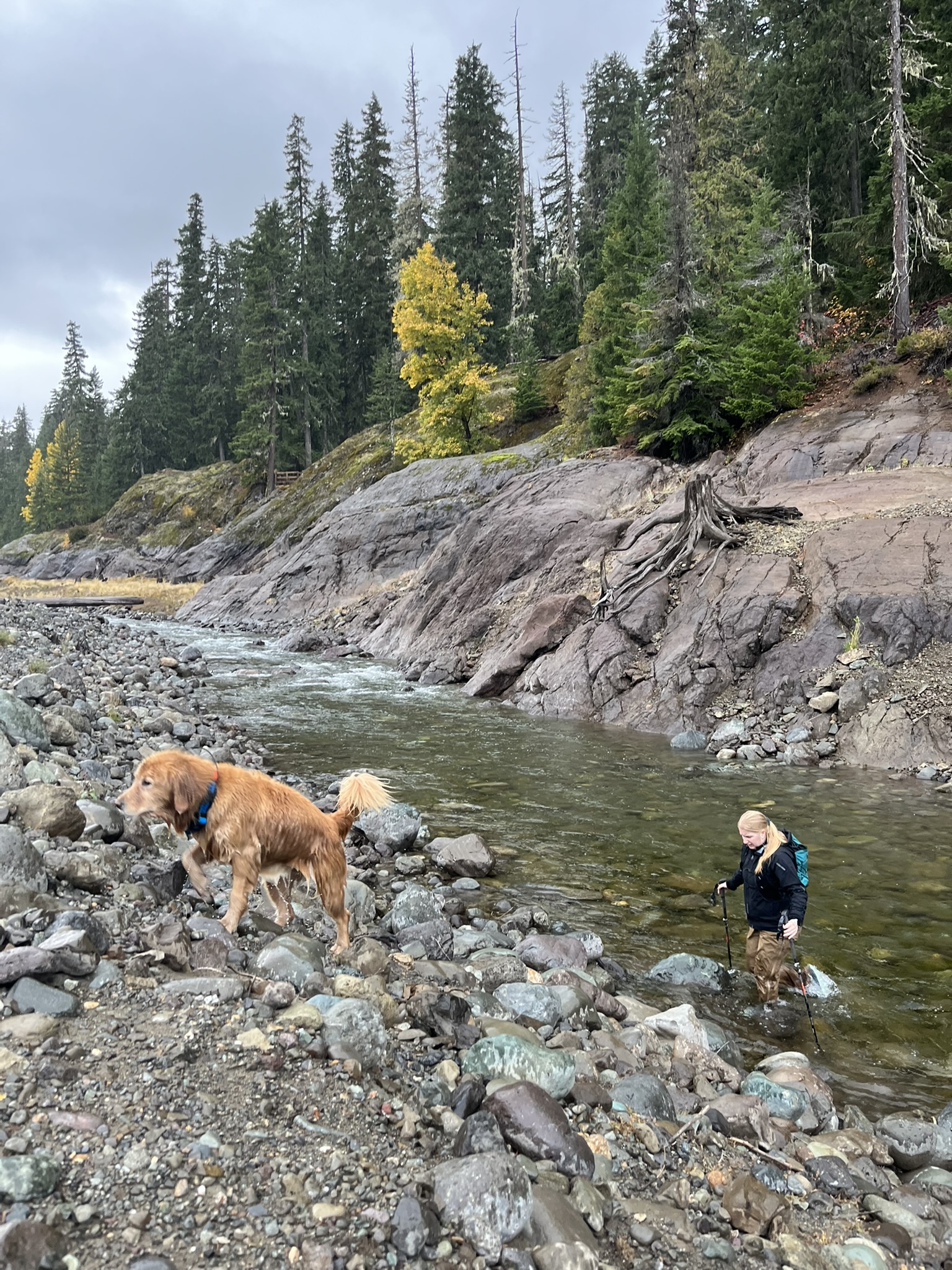
Near mile six, we dropped to a wide gravel streambed where a creek emptied into the lake. I stood in the shallows, water barely above my ankles, while the exposed rock bank rose behind me — tree roots gripping eroded soil, conifers leaning out over the creek. A single yellow-leafed tree caught the flat afternoon light. The creek water was even colder than the lake, running fast over smooth stone, and it tasted like the inside of the mountain.
We were back at the car by 4:40 PM. Six hours, seven miles, and more blowdown than anyone needed. I shook the lake water out of my coat — thoroughly, close to my human, as is tradition — and he laughed and didn't dodge. He never does. I climbed into the back seat, and he reached back and scratched behind my ears before starting the car. I was asleep before we hit the highway. The car smelled like wet dog and cedar and rain. Good smells. The best smells.