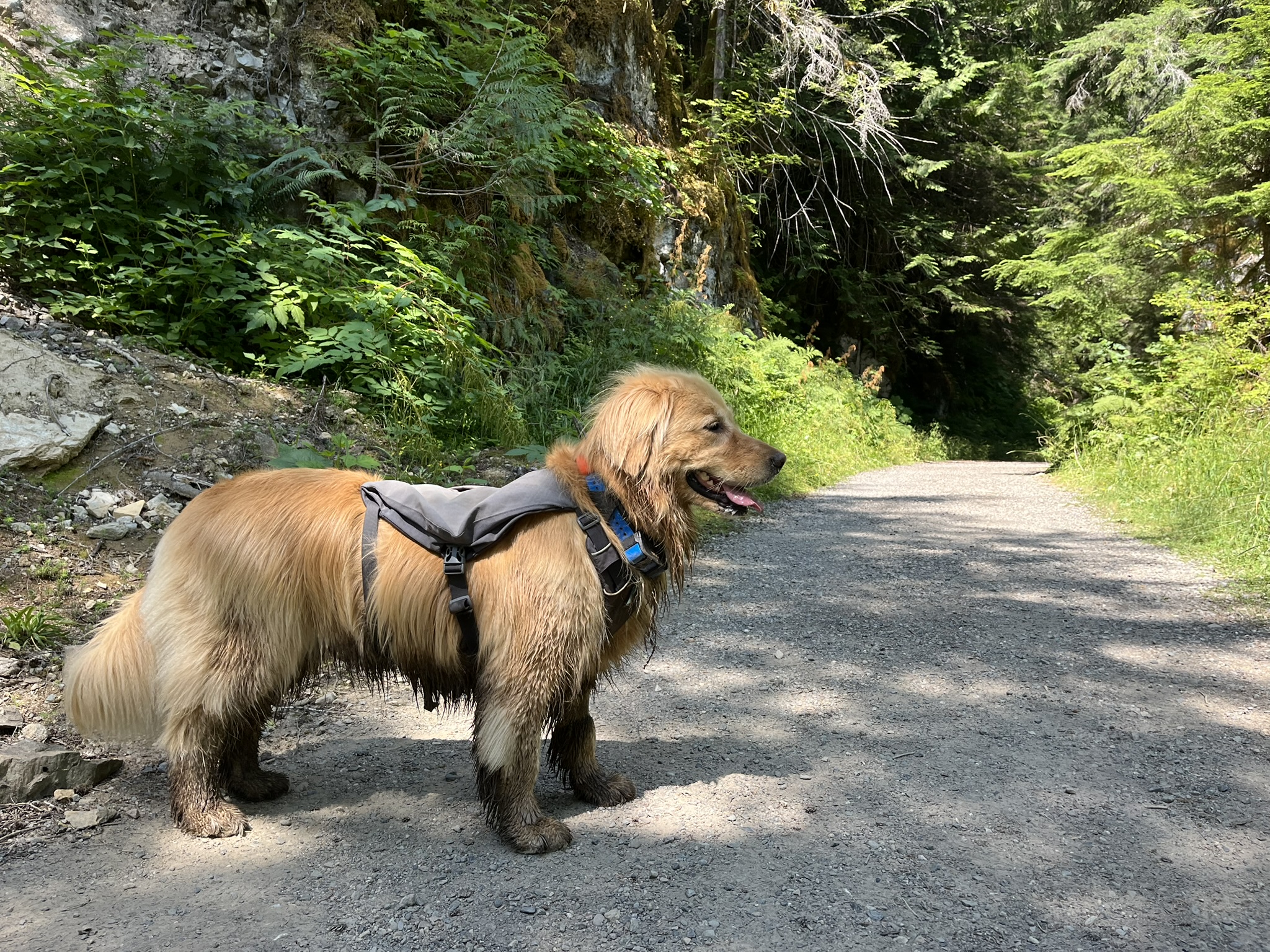
Friday Evening — The Long Way Up
We left Barlow Pass at 6 PM on a Friday after work. Late July. The Monte Cristo Road stretched south through second-growth forest — flat gravel, easy walking, nothing interesting except the smell of old cedar and something that had been a rodent recently. A mile of that before the Gothic Basin trail split off and the real work started.
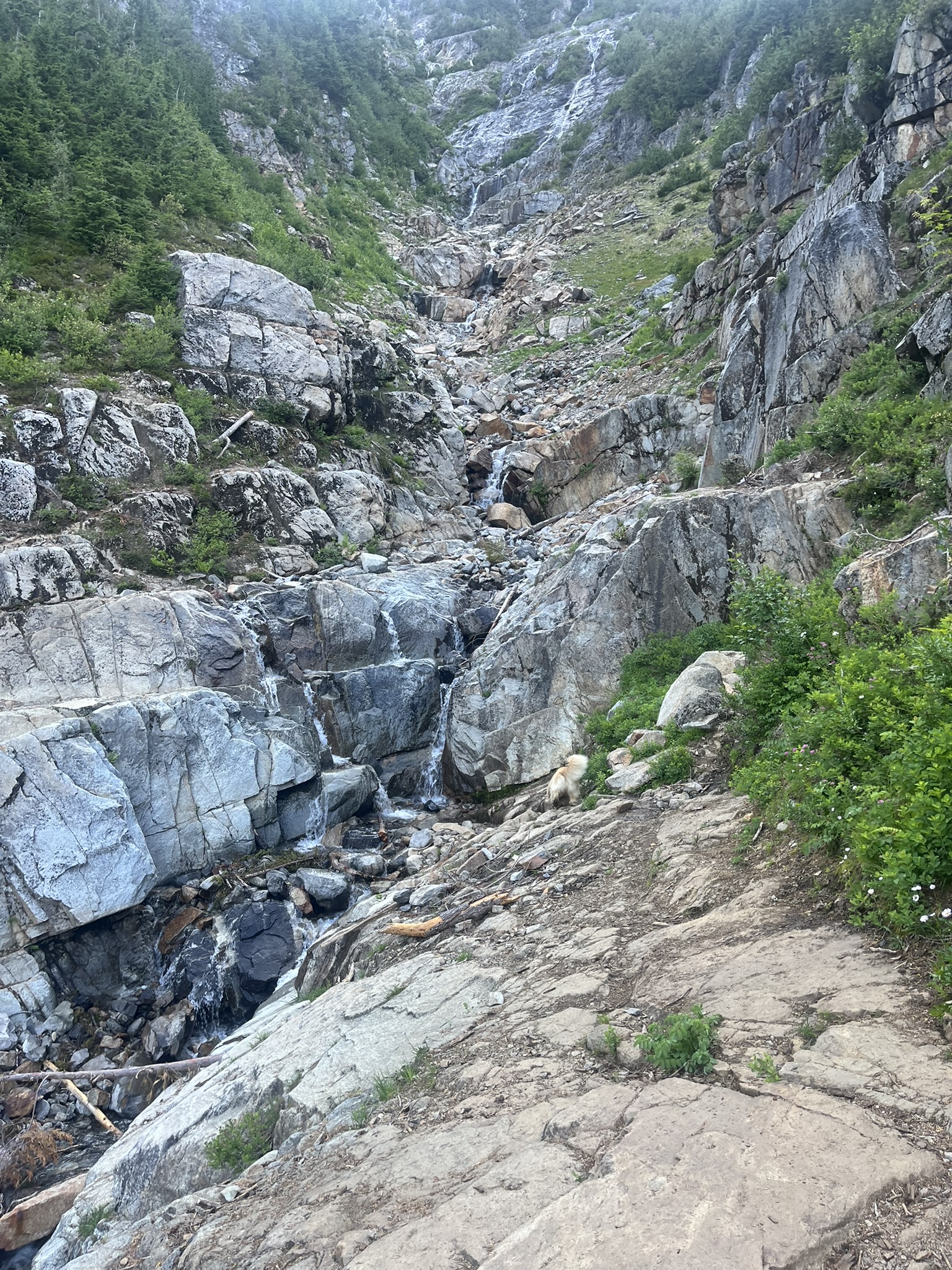
The trail doesn't believe in switchbacks. Twenty-eight hundred feet in about two and a half miles, most of it steep and rocky, threading through forest and then up granite slabs alongside a creek that sounded like it was in a hurry. Halfway up I stopped and held — something large had passed through recently. Fresh scat beside the trail, dark and full of berry seeds. Bear. Not close, but not far either. I held my nose to the ground for a long moment, reading the story, then looked back at my human. He got the message. We made noise and kept climbing. By 7 PM we were in the upper drainage — I picked my way up polished gray slabs beside a waterfall, the spray cold on my legs, the basin walls closing in above. The rock smelled like wet iron and moss.
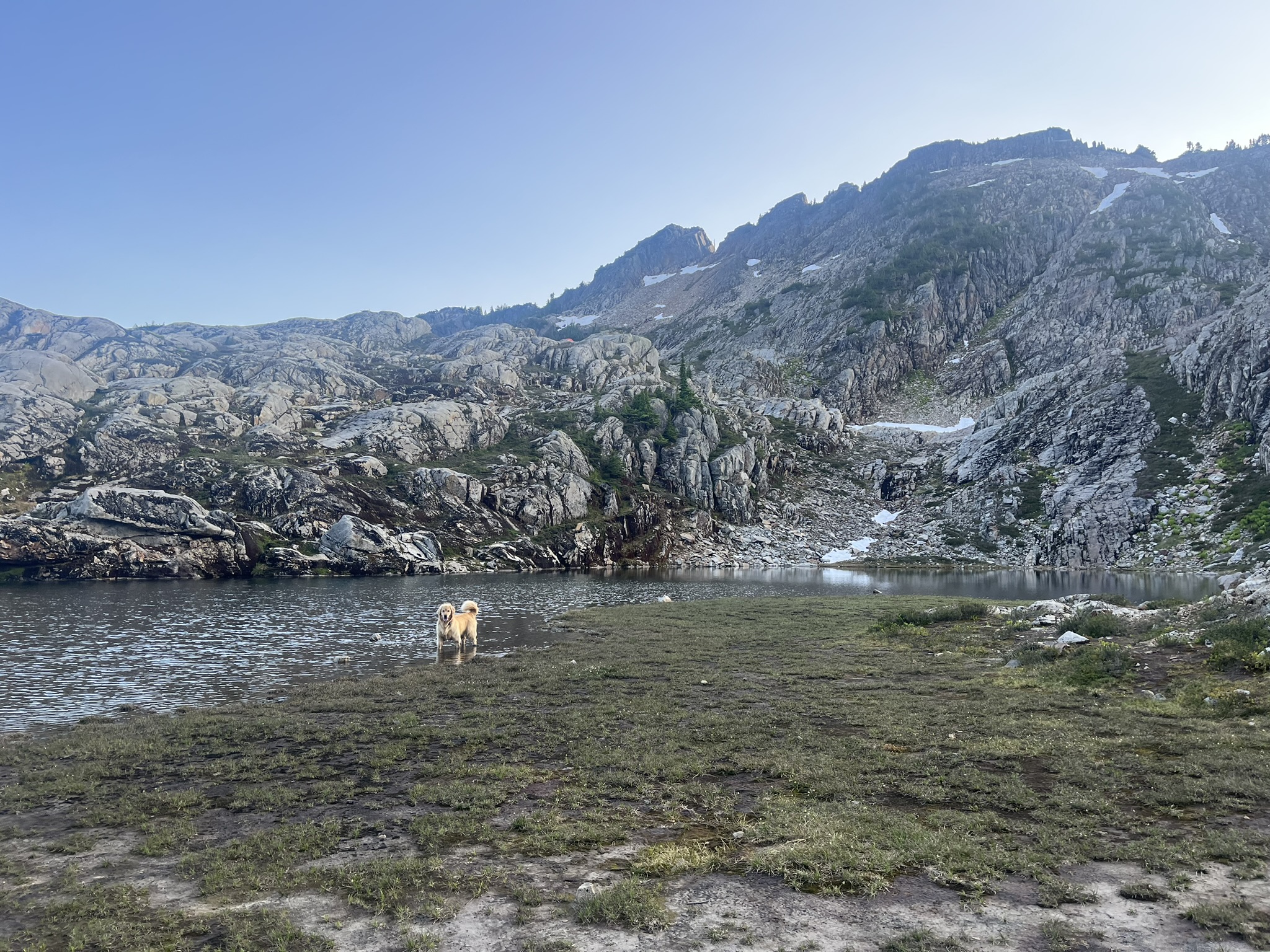
Foggy Lake
The basin opened up just before 8 PM and there it was. Foggy Lake sitting in a granite bowl — dark water rimmed with ice, jagged peaks on three sides. I walked straight in. Obviously. The water was snowmelt cold, the kind that tightens your skin and makes everything sharper. I stood waist-deep in the shallows with the whole basin reflected around me and let my nose work the cold air. This was worth every foot of that climb.
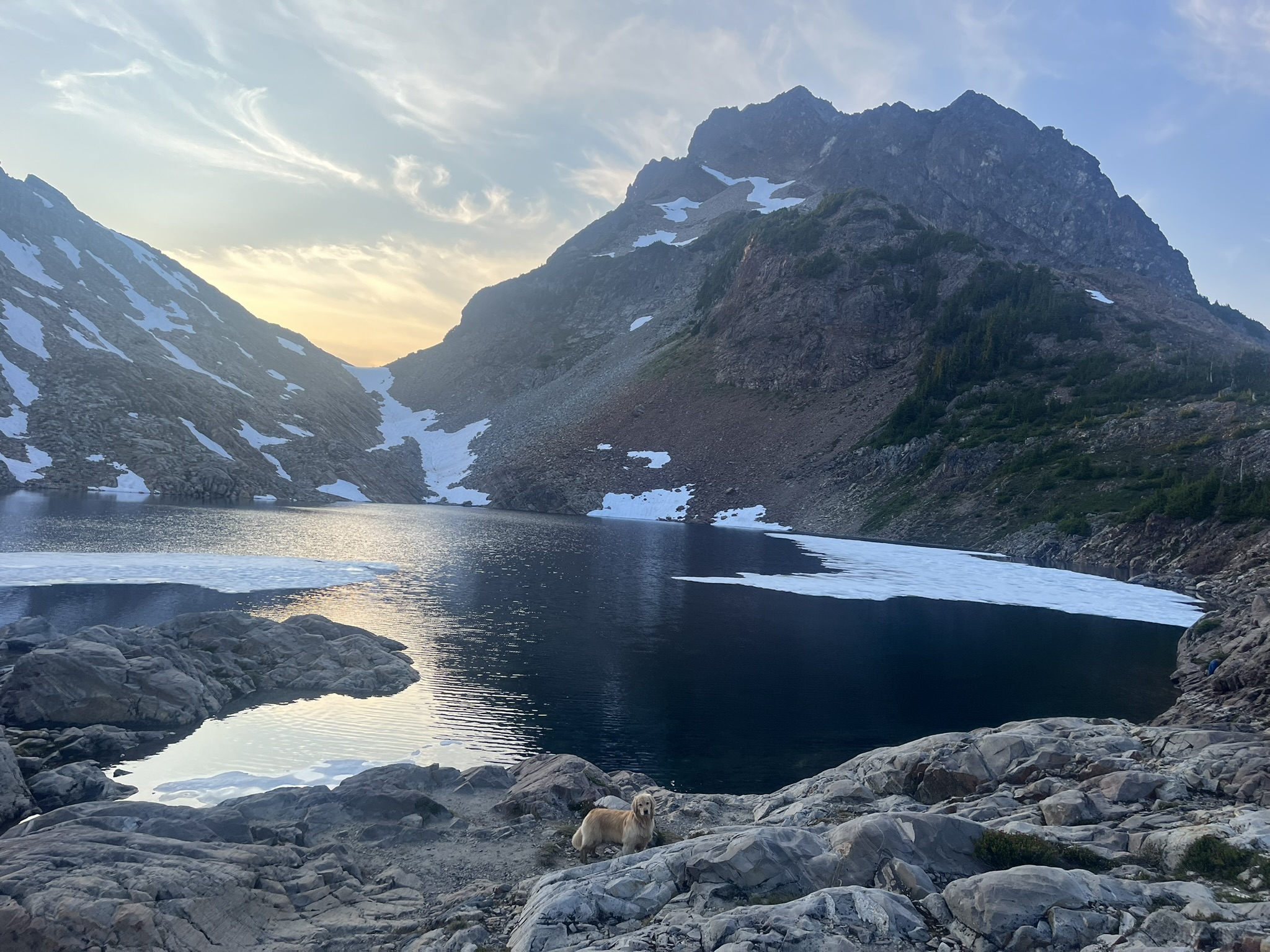
We climbed above the lake to find a camp spot and the light changed everything. Gothic Peak filled the sky to the west — dark rock walls and couloirs streaked with snow, the lake at its base half-frozen, the last sun turning the water to copper. I stood on a granite shelf and looked up at it. The air was still and cold and smelled like nothing but altitude. This was the view.
Above the basin, talus opened into views east across the Cascades. Sunset fading to blue dusk, snow-capped peaks layered against the sky. I moved through loose rock and alpine wildflowers — their stems brushing my belly, the petals already closing for the night. The rock was still warm from the day under my paws.
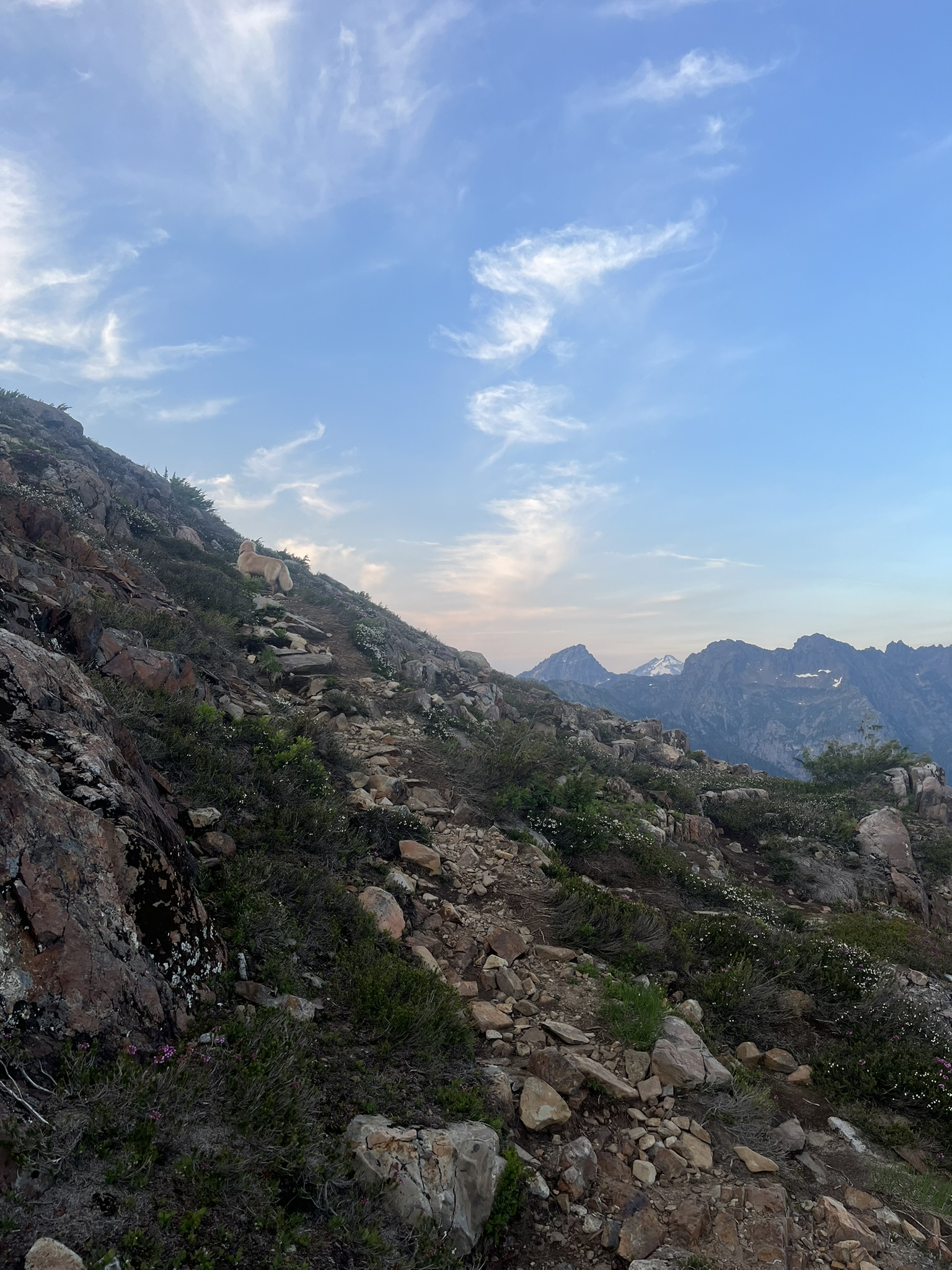
Camp Above the World
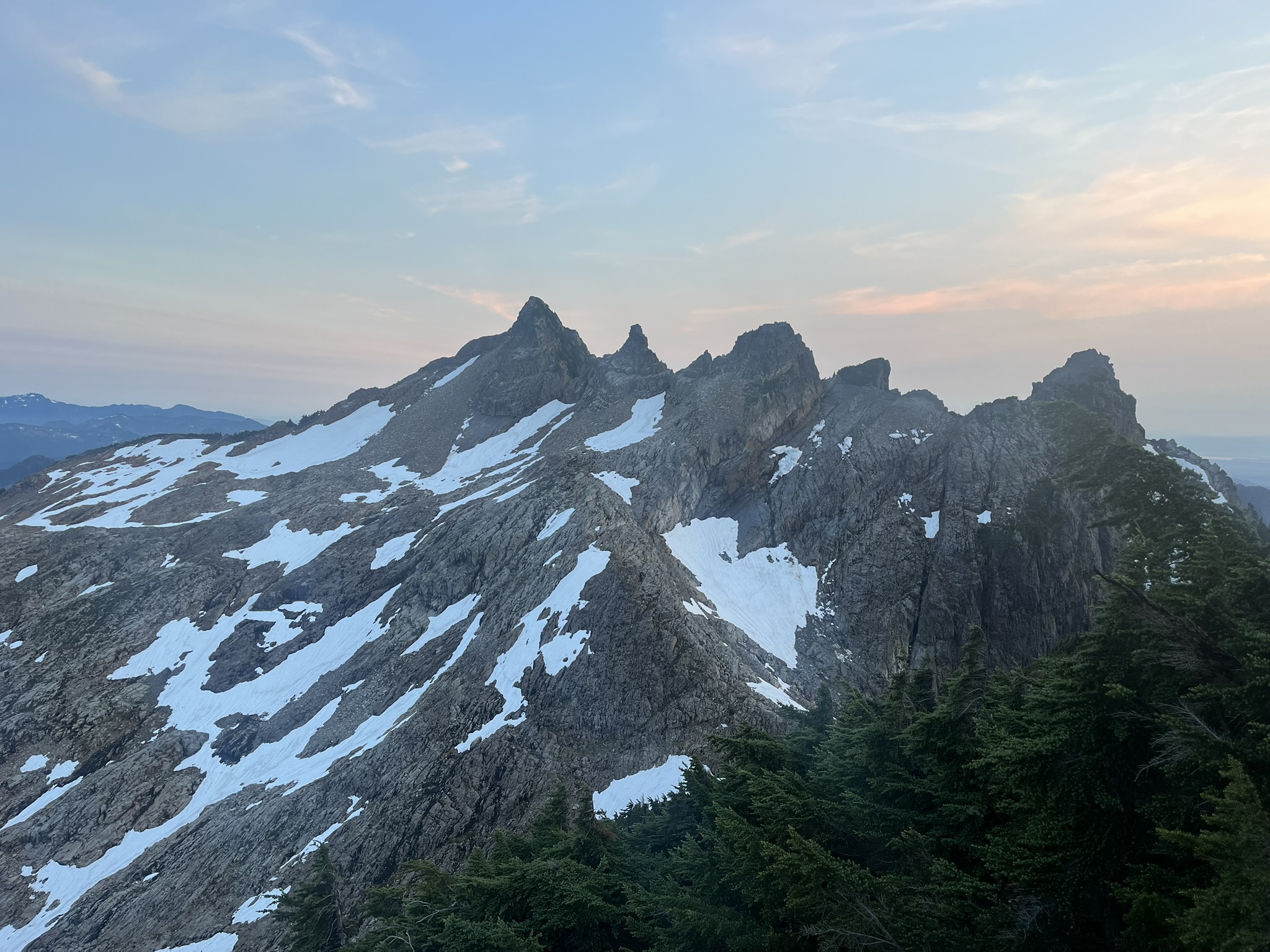
We set up on a flat granite bench above the basin — past the spots where everyone else stops, because my human knows I like privacy. He always finds us a spot like this. Quiet. Away from other groups and their dogs. Just the two of us and the mountains. The Del Campo and Gothic Peak ridgeline rose directly across from us. A wall of dark spires and snow catching the last light.
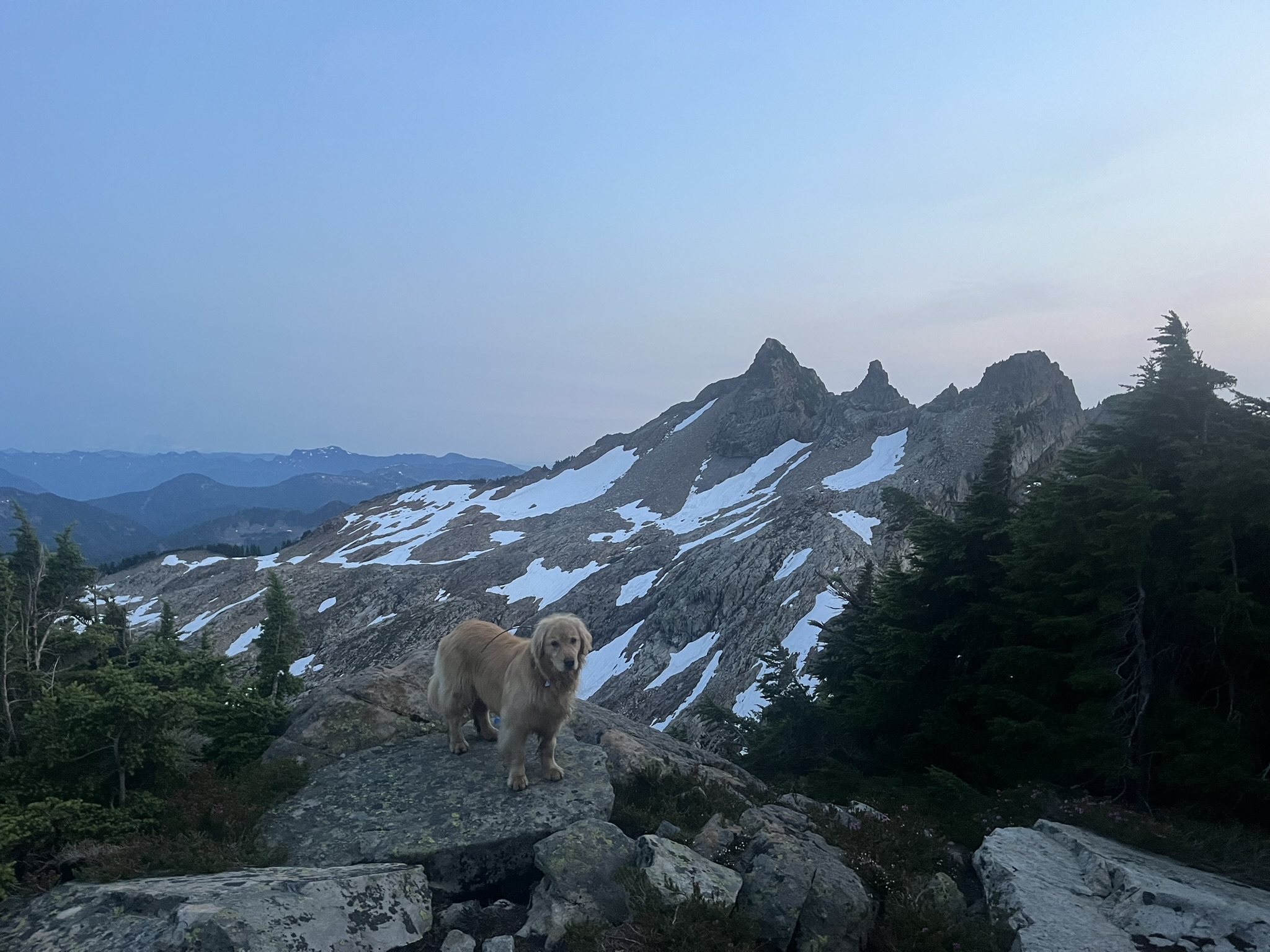
I found a boulder. Claimed it. Stood on top with the ridge behind me — peaks with late snow, subalpine fir below, the sky going purple. I wasn't posing. I was standing where I wanted to stand. There's a difference.
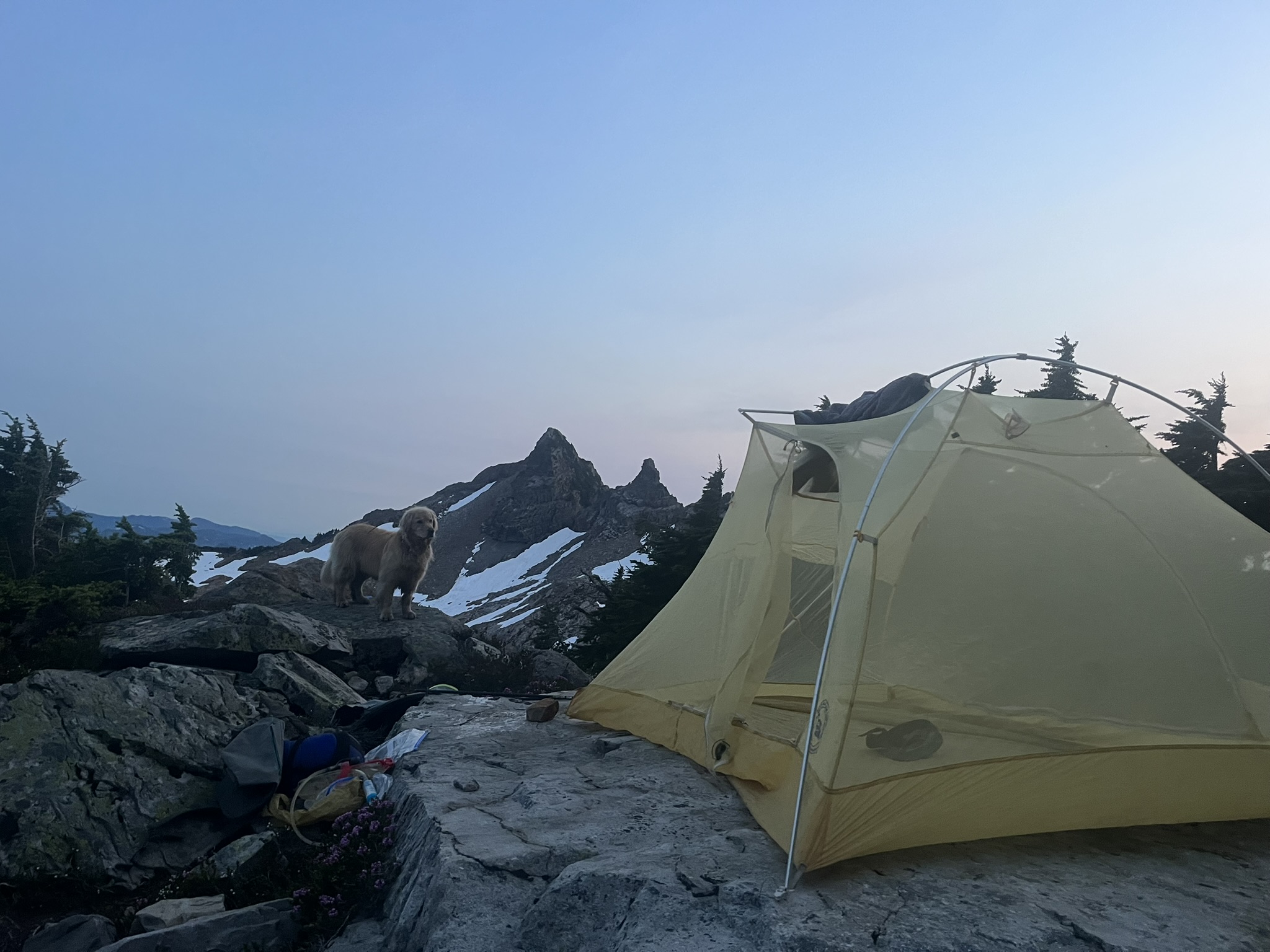
The tent went up on smooth granite. I stood on the rocks beside it watching the last light leave Gothic Peak's spires. Gear scattered across the slabs, wildflowers pushing through cracks in the stone. Close to 10 PM before we crawled in. I could smell the cold settling into the basin — temperature dropping, dew forming on the rock, the air thickening.
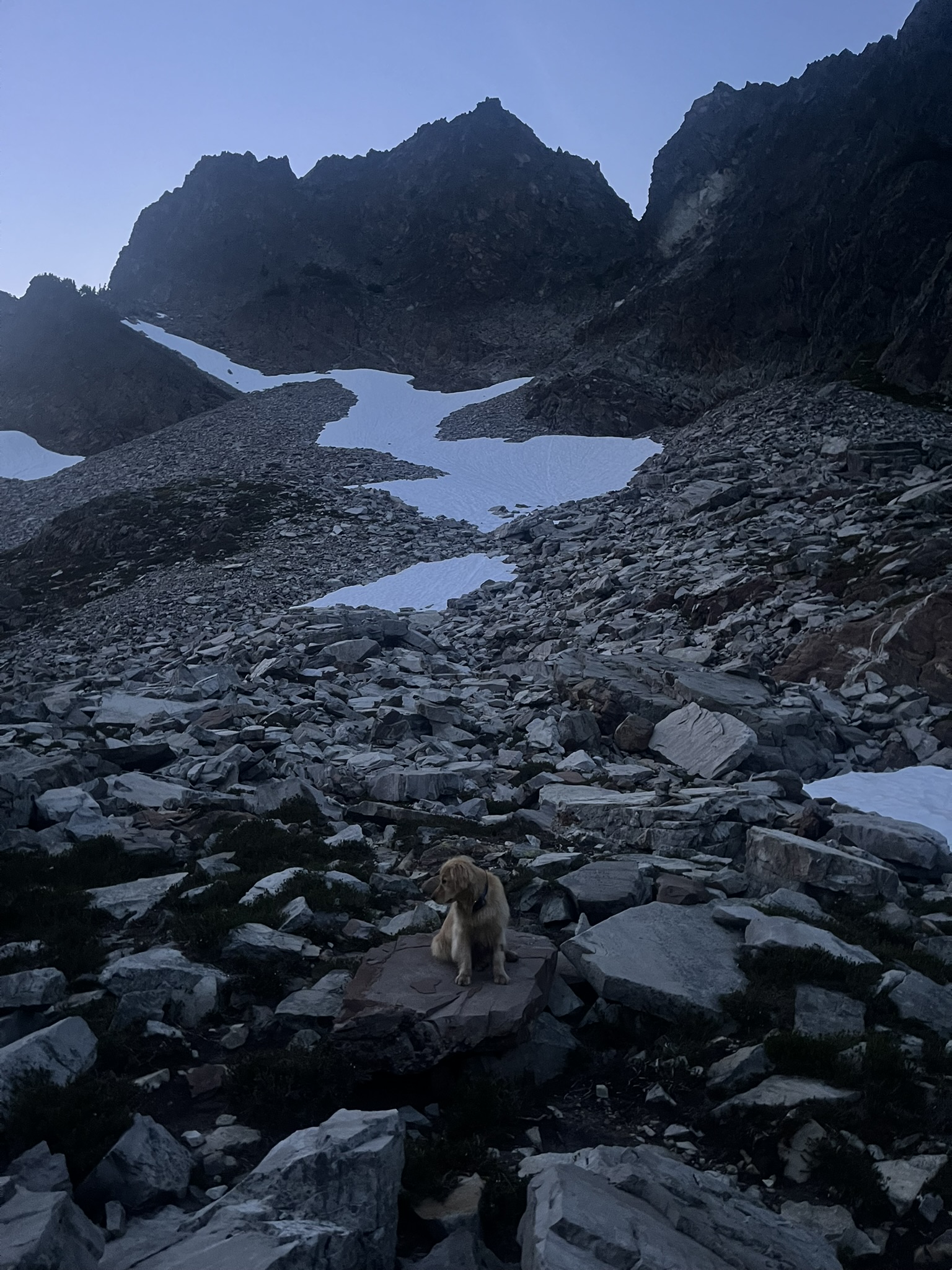
Before bed I settled into the talus above camp and sat looking up at the headwall. Snow in the couloirs. Dark rock. Silence — the kind you only get above treeline when the wind drops and the world holds its breath. I held mine too. This is what I come for. Not because my human brings me. Because the mountains are mine as much as his.
Saturday Morning — Del Campo
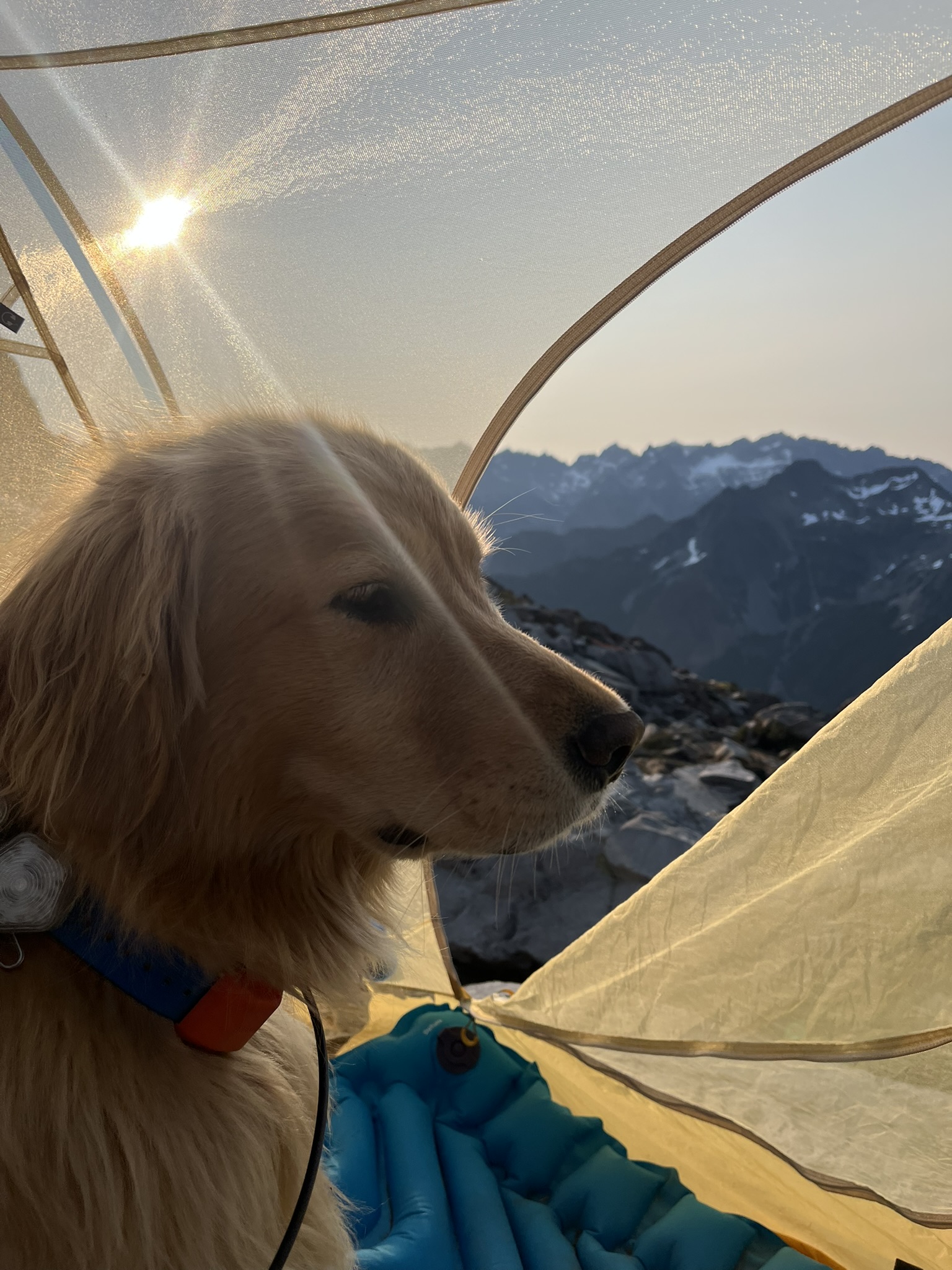
Morning came through the tent mesh. I sat watching the sun hit the peaks to the east, the sleeping pad smooth and cool beneath me, distant snow-covered summits framed in the open door. I wasn't in a rush. Mornings above treeline belong to whoever wakes up first, and that's always me.
By 7:30 we'd broken camp and were heading up. Del Campo Peak — 6,610 feet above the basin, all off-trail. Loose rock and then class 3 scrambling on the upper face. I moved fast through the talus, harness on, picking my line up slabs that got steeper with each pitch. The rock was cold and dry. Good grip.
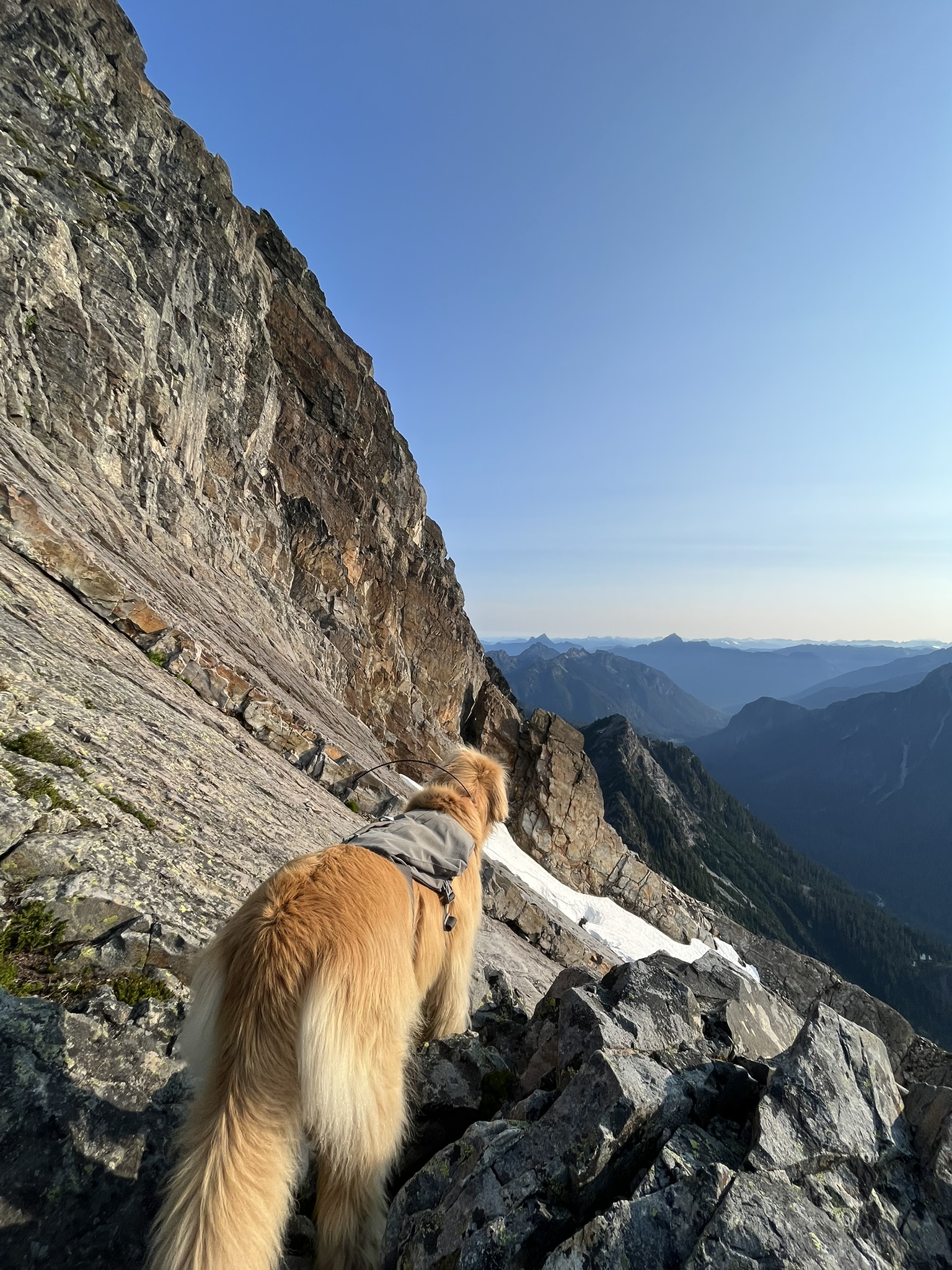
The last hundred feet are exposed. Steep ledges, big drops, hands and paws on rock. I climbed ahead, tail up, Foggy Lake shrinking below us. I don't hesitate on terrain like this. I read the rock — where it's solid, where it'll shift, where to commit weight. My human says I'm better at it than most people. He's not wrong.
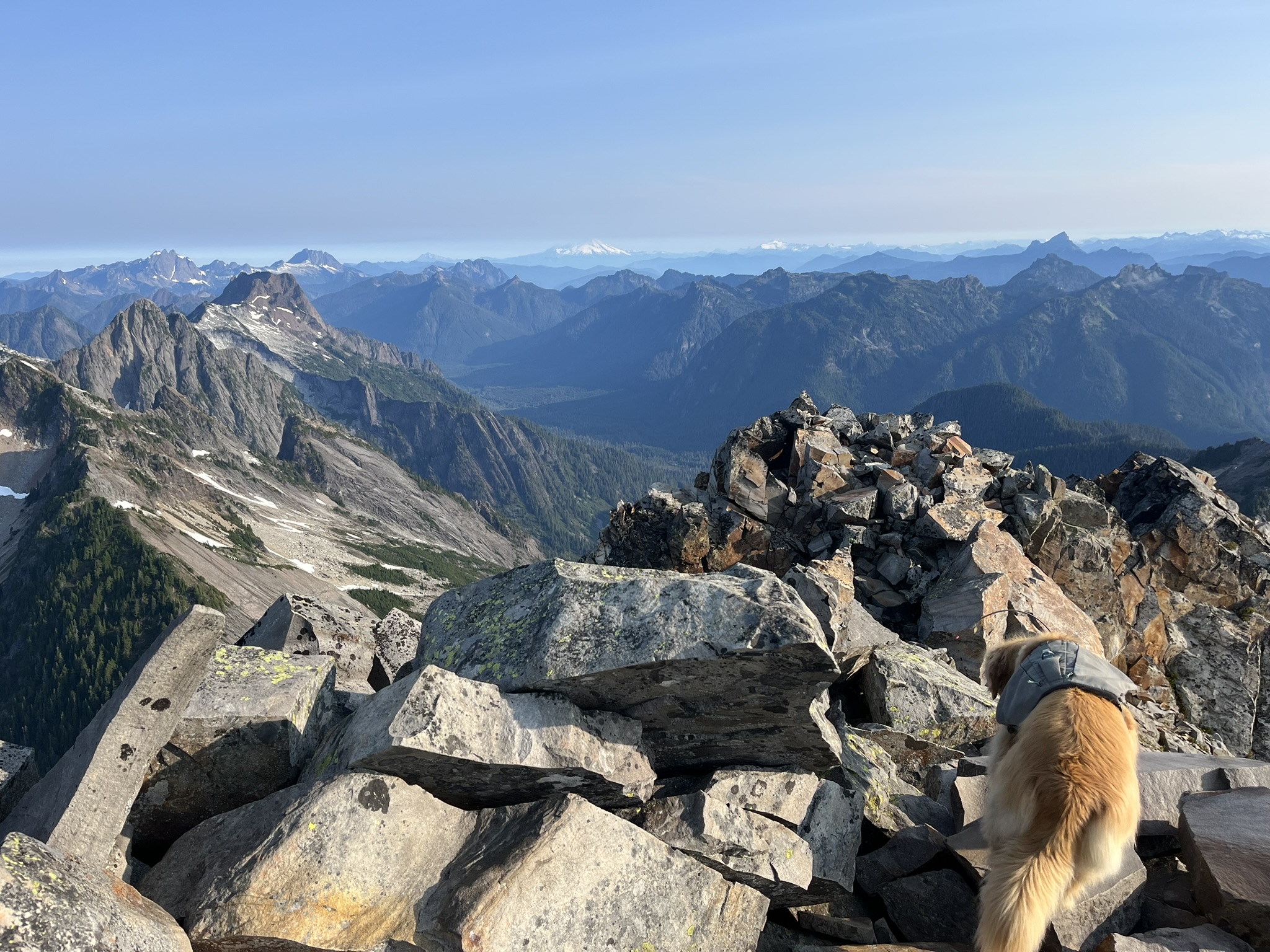
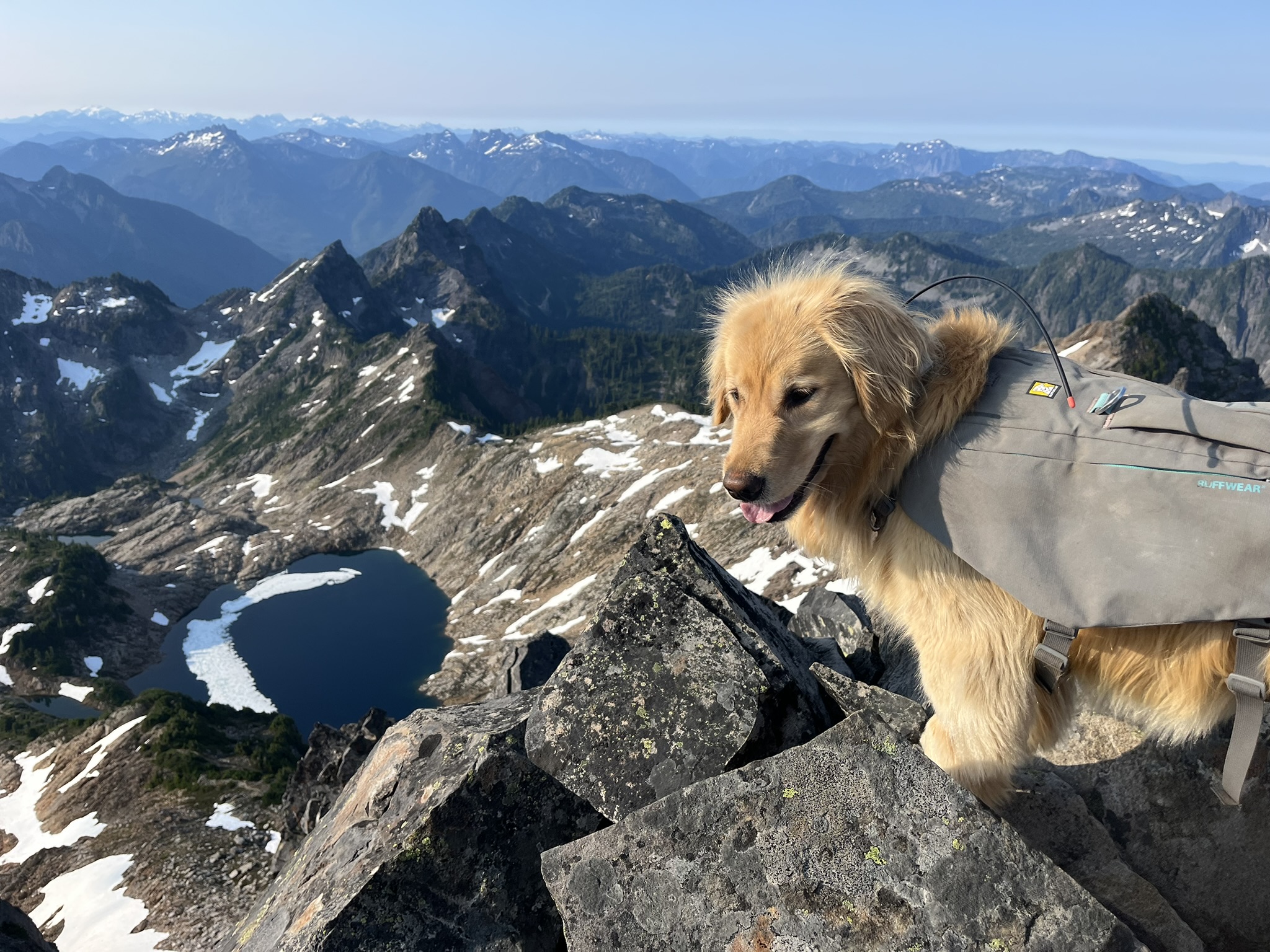
The summit opened to everything. A full 360 of the North Cascades — Glacier Peak floating in the haze to the northeast, Sloan and Monte Cristo to the south, the basin lakes scattered like shards of dark glass far below. I stood on the summit rocks with my pack on, tongue out, the wind pressing through my fur from every direction at once. This is the reason for all of it.
Gothic Peak
We dropped back to the basin and kept going. Gothic Peak had been watching us all morning from across the way — a narrow spine of rock topping out at 6,213 feet with drops on both sides. I was moving well and the weather was holding. My human read my face and we went for it.
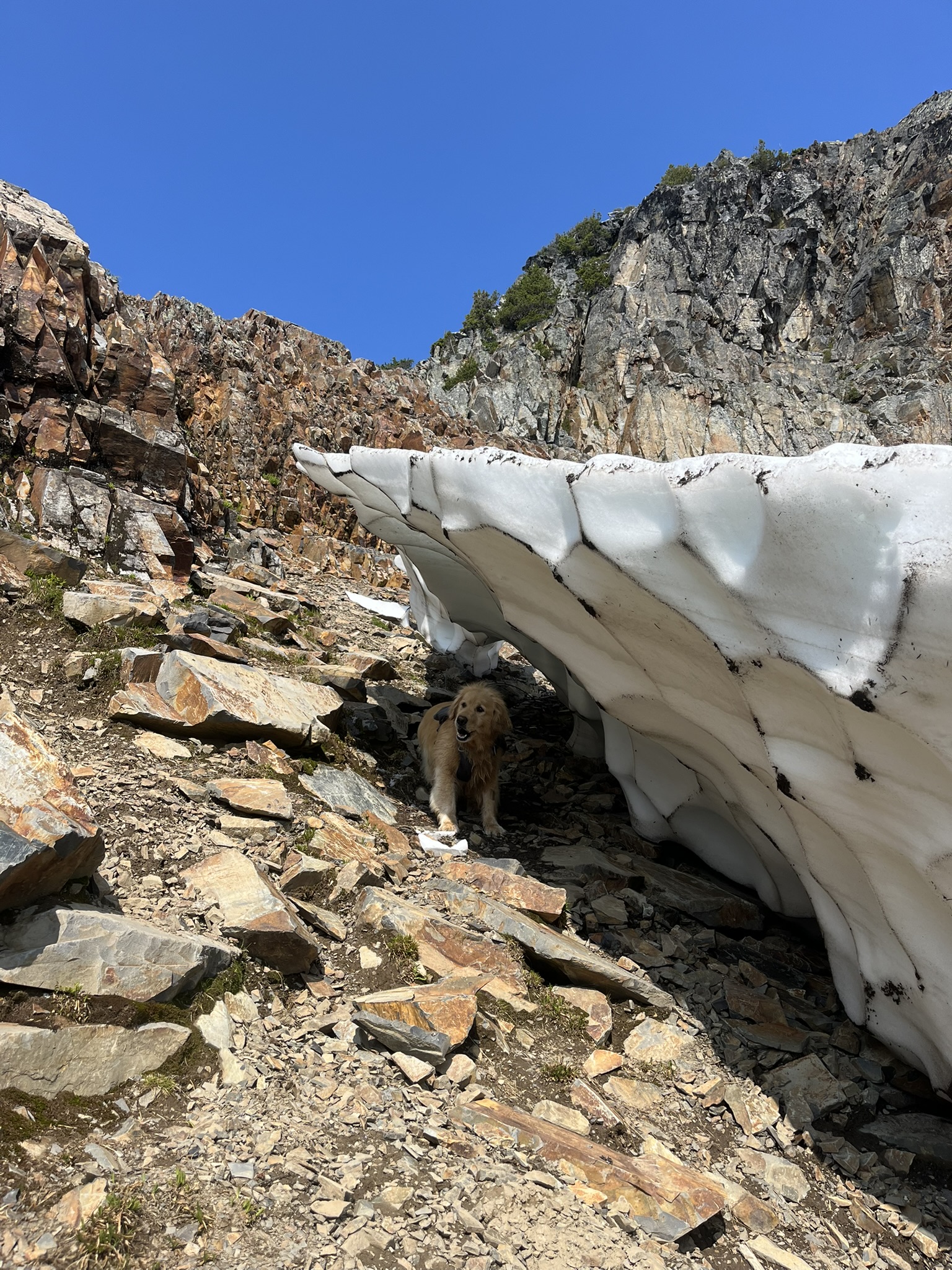
The approach crossed talus and a few stubborn snow patches. I ducked under a snow arch that had melted into an overhang — water dripping cold on my back, the rock face above steep and stained orange with iron. Smelled like rust and winter.
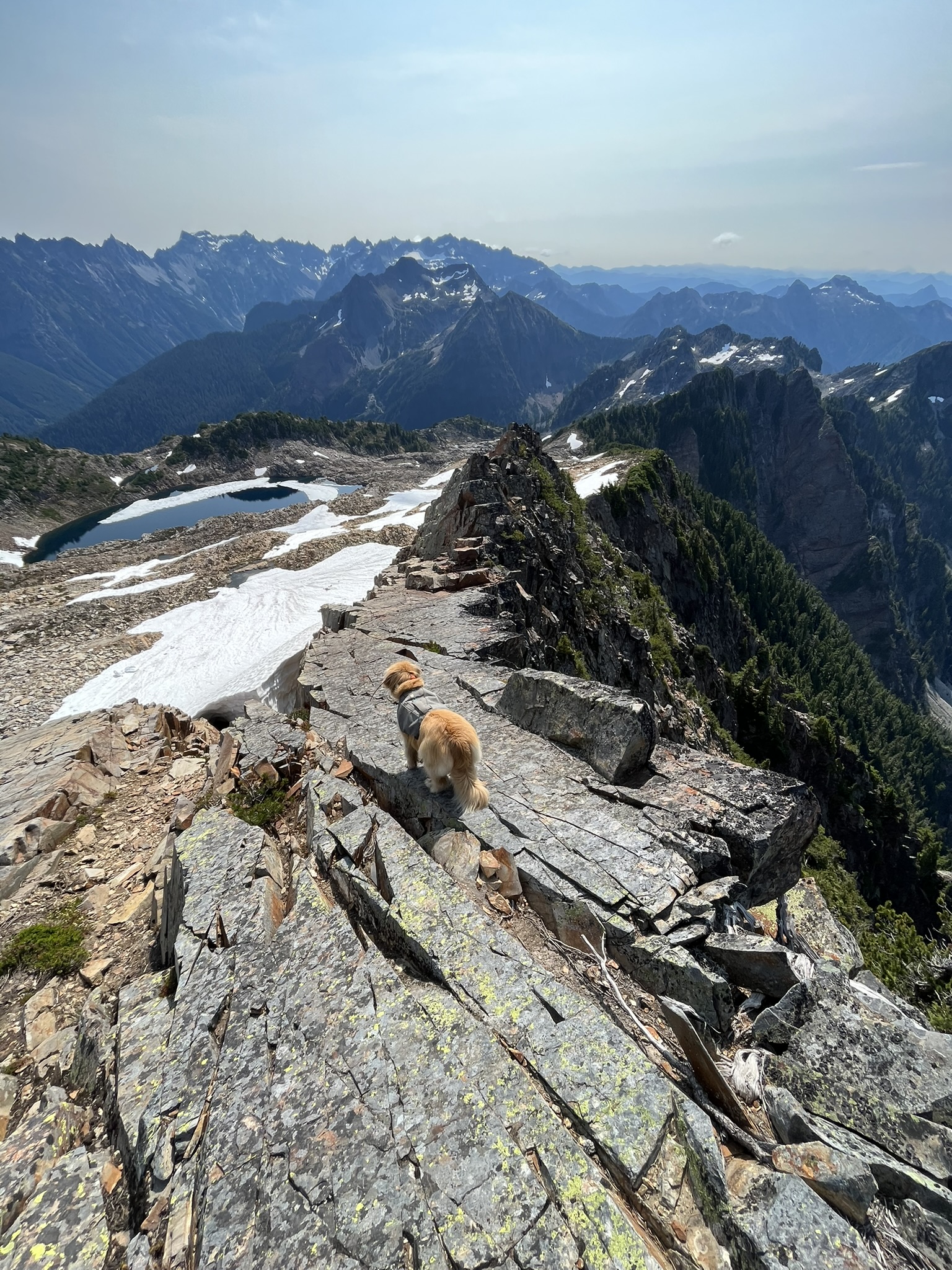
Gothic is supposed to be easier than Del Campo. Not for me. A vertical step near the top — taller than me, hard to protect — was the crux. I committed without looking down. Past that, the ridge to the summit was the best terrain of the trip. Narrow. Exposed. Knife-edge in places where I could see a lake a thousand feet below on one side and a valley on the other. I walked the crest with rock spires beside me and the full Monte Cristo range behind. This is what my legs were built for.
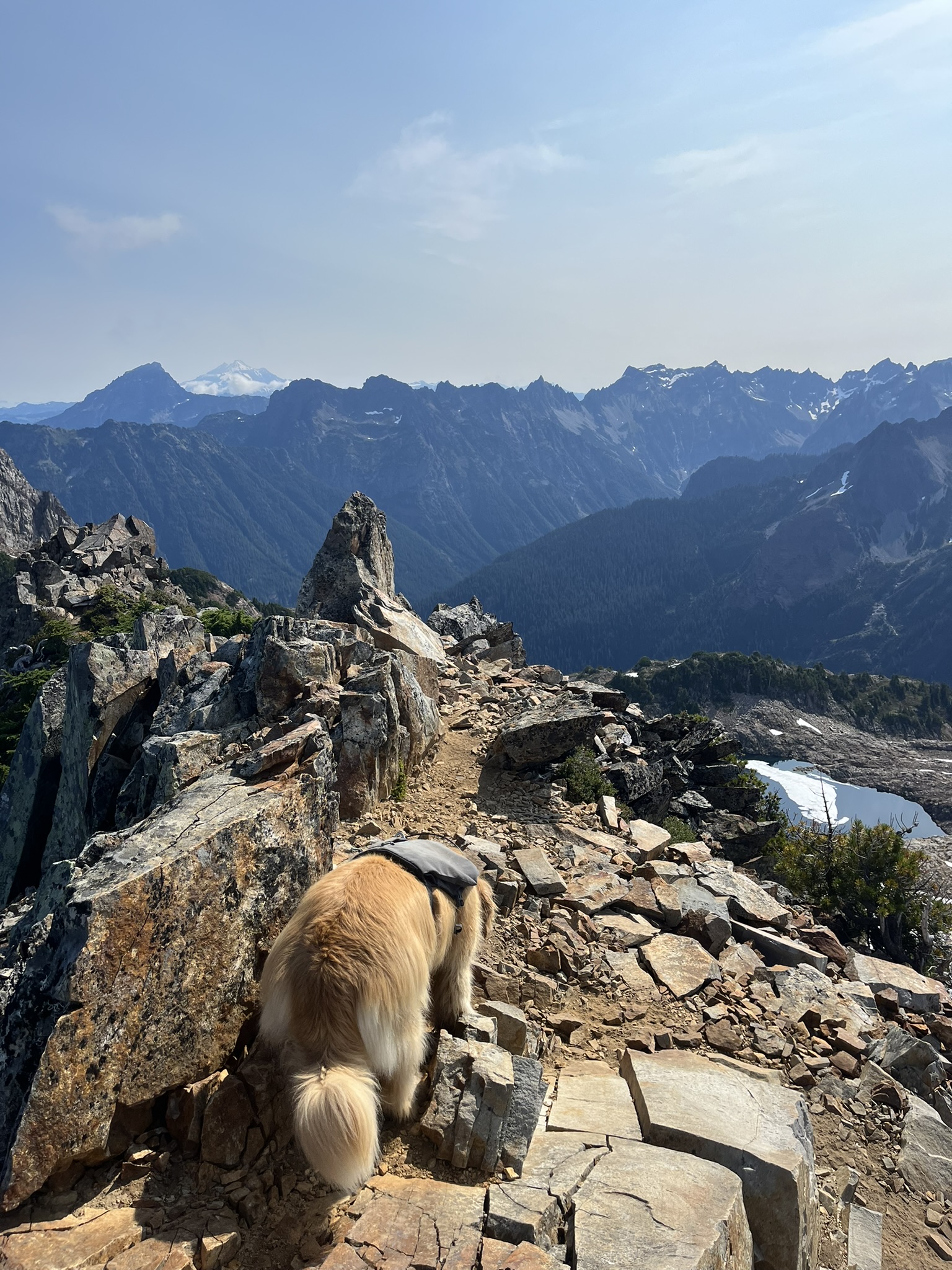
On top I stood on broken rock and looked out over a landscape that went on forever. Peak after peak fading into summer haze. Del Campo's profile rising behind me. Snow patches clinging to every north face below. The air smelled like warm granite and smoke from fires a hundred miles away.
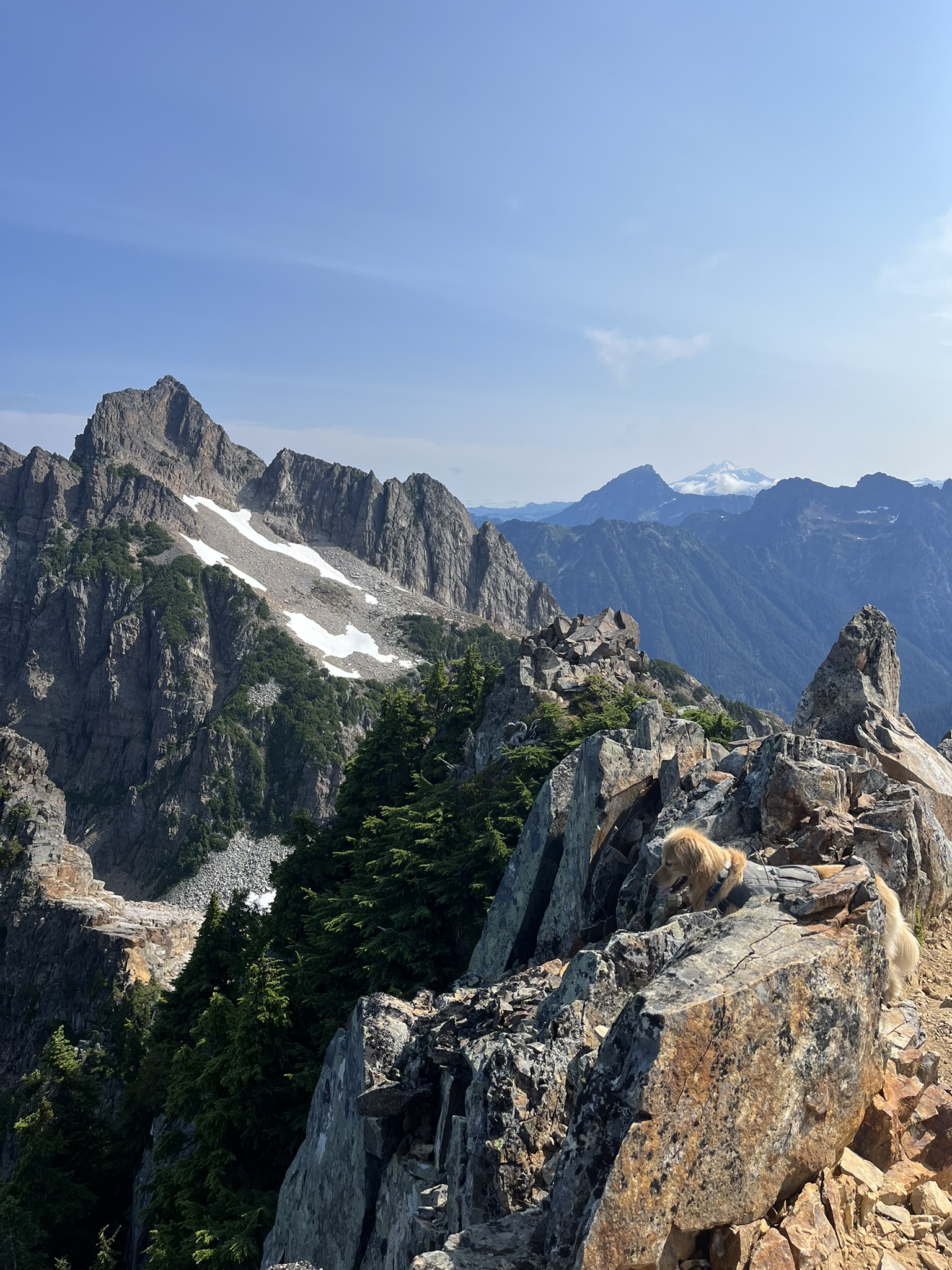
On the way down we crossed a granite shelf and stopped. Below us, a tarn sat in a bowl of smooth rock and snow — deep blue, perfectly still, the kind of water that only exists for two months before the mountain takes it back. I walked to the edge and looked down. Cold rose off the surface like breath.
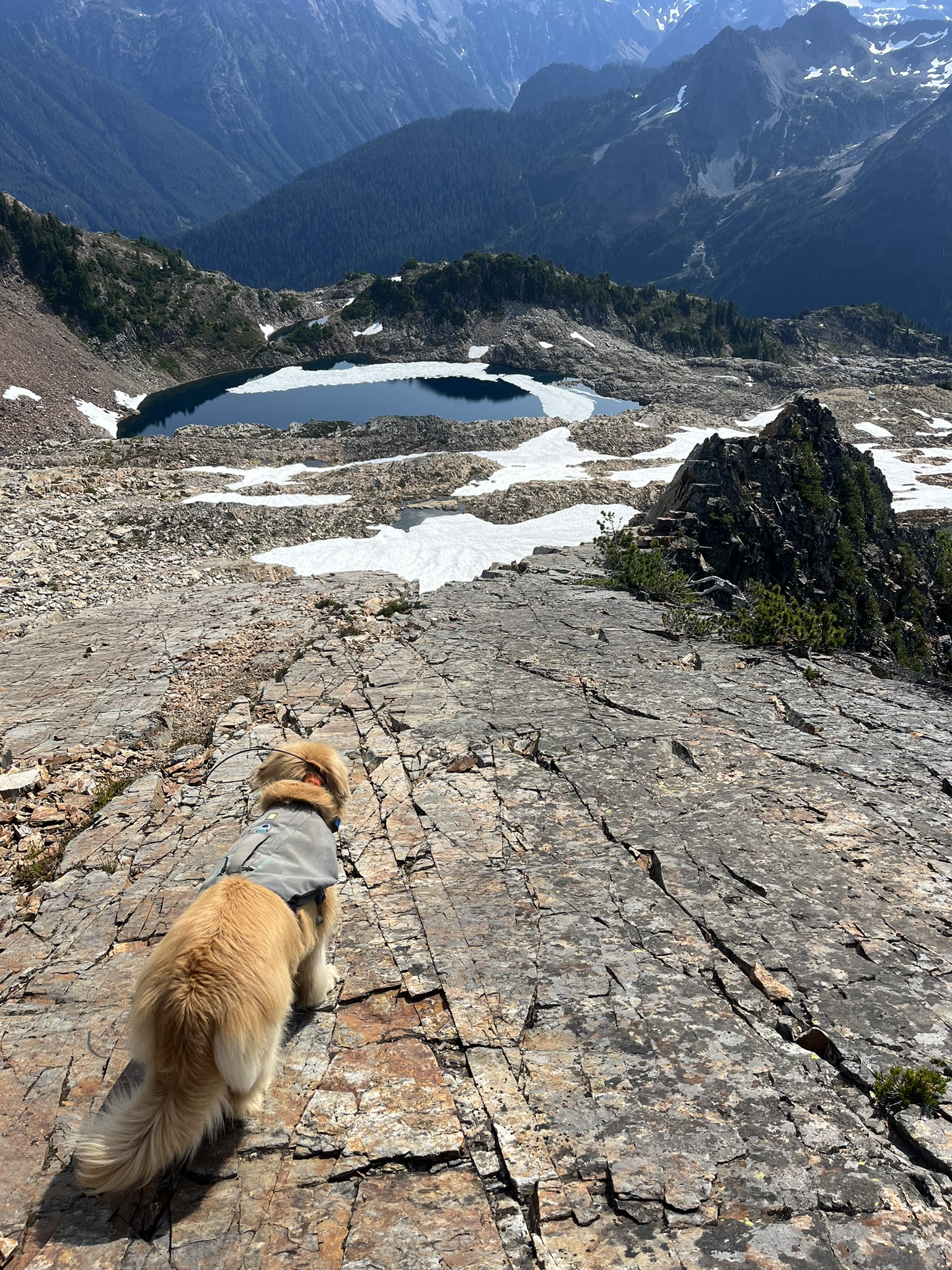
The ridge kept giving. Every turn revealed another angle on the basin, another lake, another view of peaks dropping away to the south. I moved along the crest in my pack, the whole world below me, the wind steady and cool.
The Flat Road Home
We reversed everything — talus back to the basin, steep trail back to the creek, forest back to the road. Fourteen miles and fifty-seven hundred feet of elevation by the time we hit the Monte Cristo Road again. I was soaked from every creek crossing on the way down, fur matted, mud on my legs, tongue out. Still pulling ahead on the flat gravel. My human was dragging behind me — but smiling. We do this to each other. He picks the mountains. I set the pace. It works.