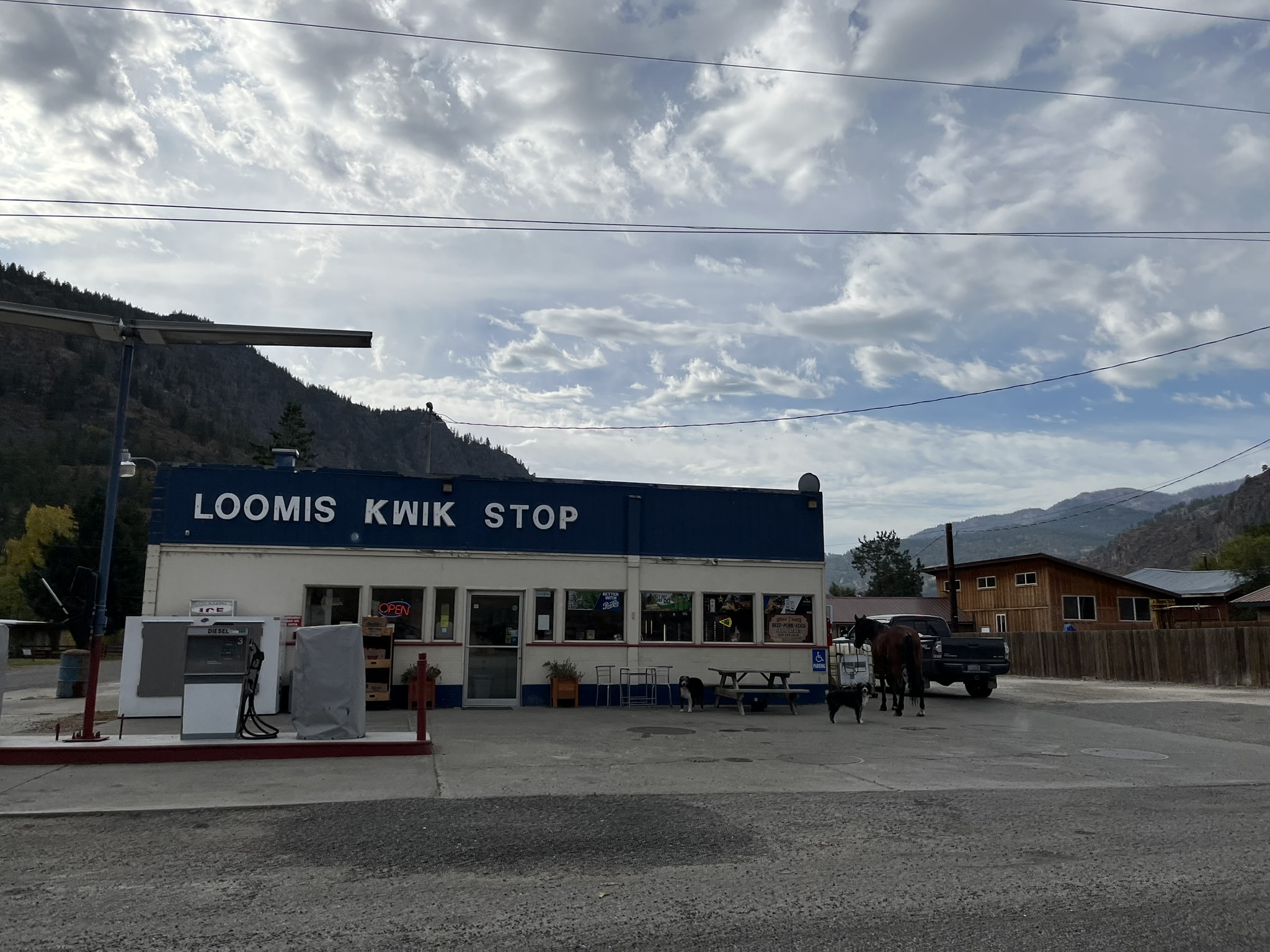
Loomis
The last stop before the Pasayten is the Loomis Kwik Stop — a gas station in a town of maybe forty people. There was a horse tied to a truck in the parking lot. Dogs wandering between the pumps. I watched them from the car with total indifference. Boy dogs, mostly. Not my concern. My human topped off the tank, bought something unnecessary, and then we drove thirty miles of dirt road into the mountains. The air coming through the window changed three times — dry sage, then dust, then cold pine. I tracked every shift.
Windy Peak — 8,350 Feet
We started from the Chewuch trailhead on a Friday in early October and climbed north along the Boundary Trail. The eastern Pasayten is different from the rest of the Cascades — drier, more open, granite instead of volcanic rock. The ground smelled like sun-baked needles and dry earth instead of the wet moss I'm used to. Much of the trail passes through old burn scars, but the larch were at peak color, and where they'd survived the fires entire hillsides burned gold against a sky that was building toward something serious.
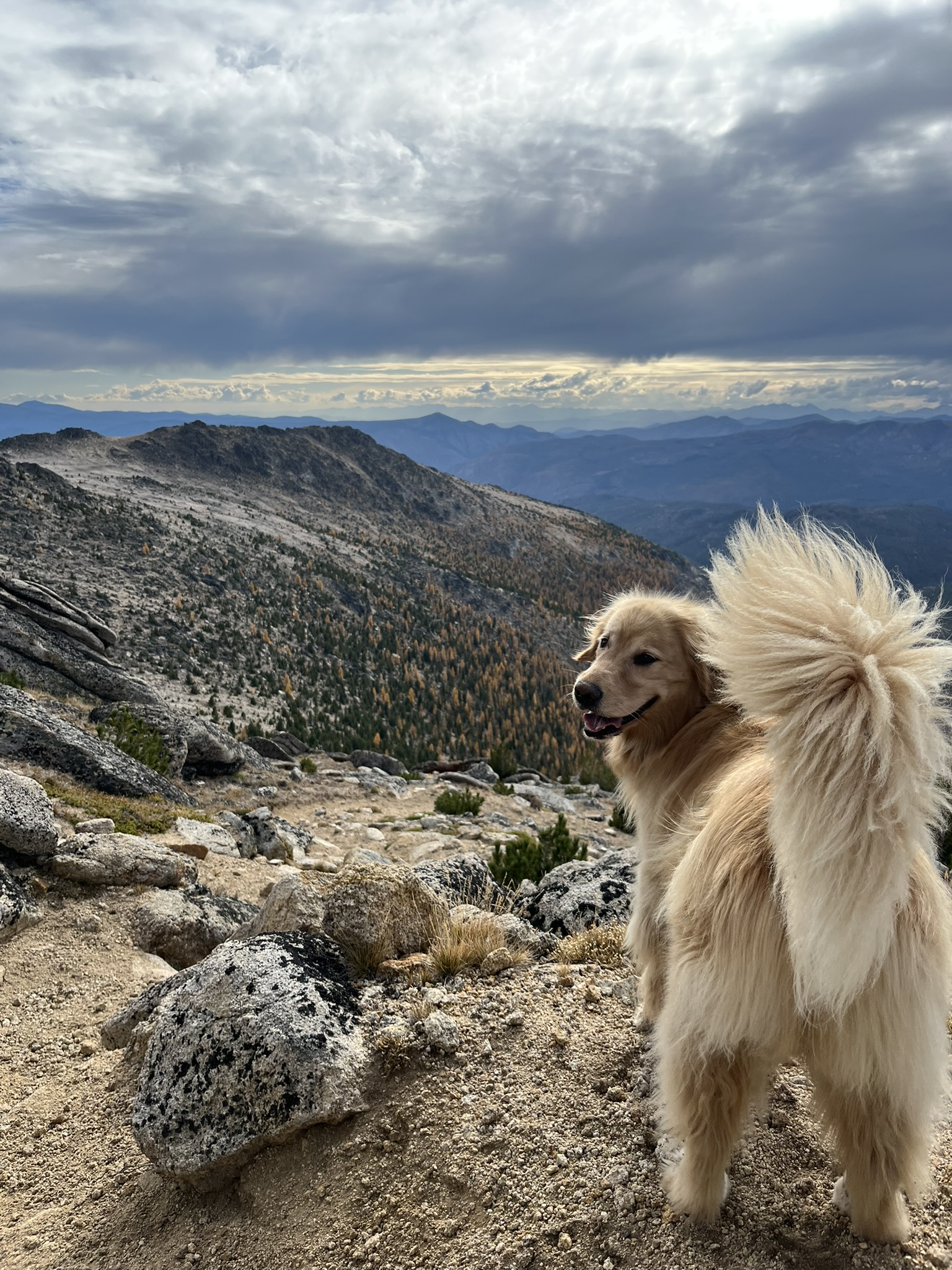
By midafternoon we'd summited Windy Peak at 8,350 feet. I lay on a granite slab and looked out over the Pasayten — a sea of golden larch fading into deep valleys, ridges layering east toward the Okanogan. Storm clouds boiling overhead but the light still finding gaps. Wind hitting me from every direction, carrying the smell of distant rain and larch resin and cold rock. The kind of view that makes my chest feel big.
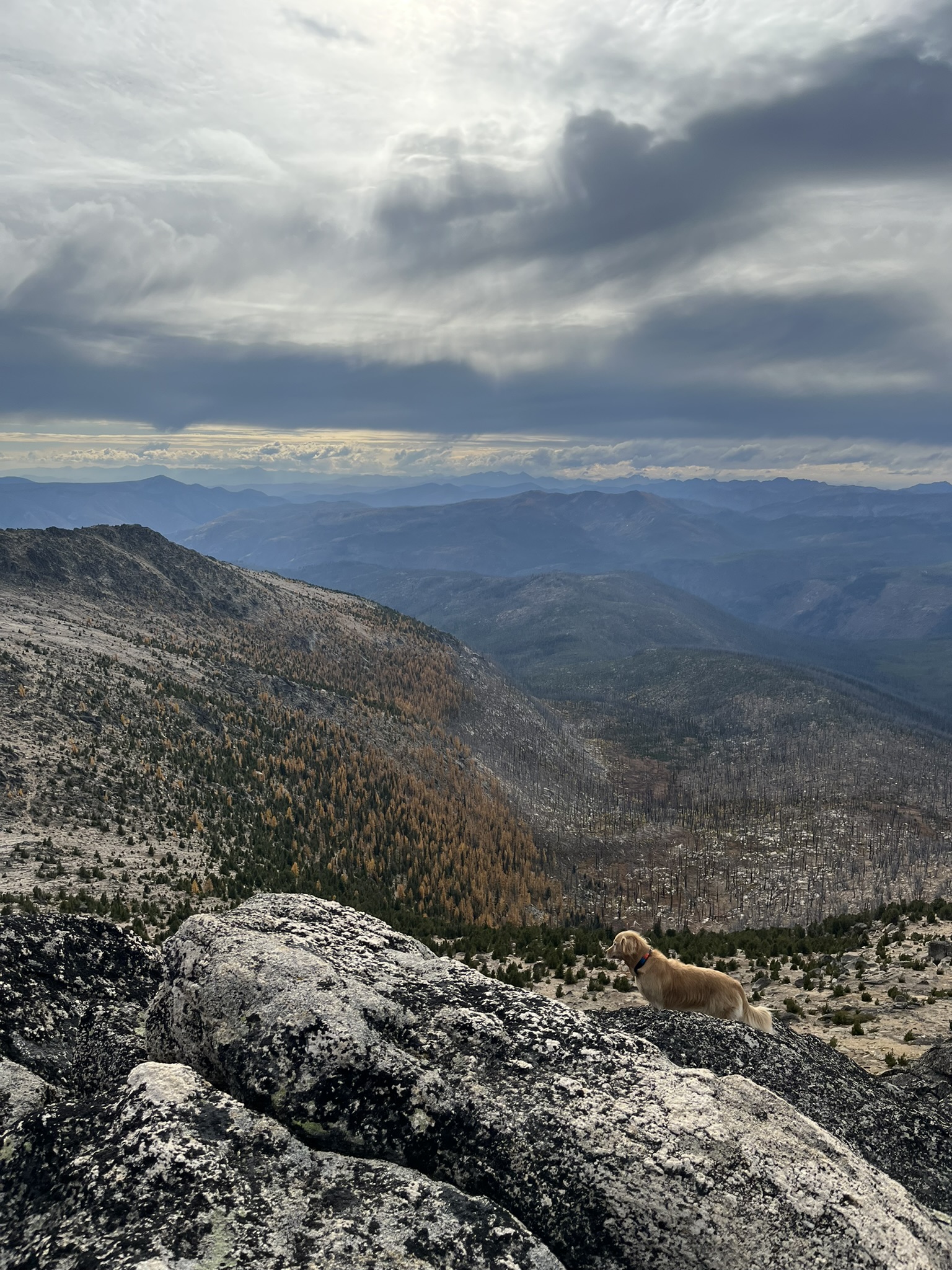
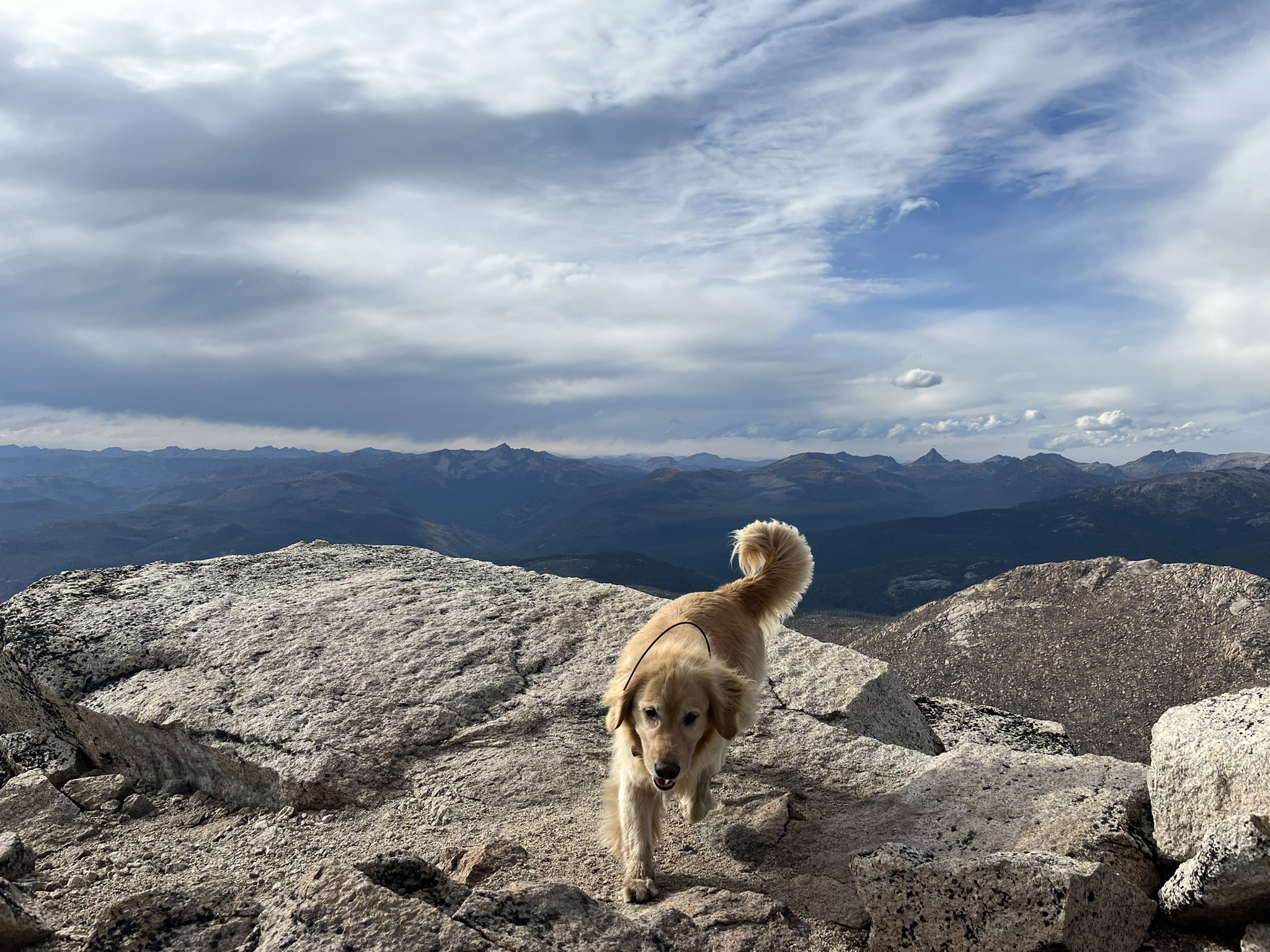
I stood on the ridge with my tail catching the wind, the whole eastern Pasayten behind me — golden larch slopes dropping away on both sides, distant peaks layered to the horizon. The clouds were getting dark and heavy. I could smell the electricity in them. We needed to find camp.
Hail at Camp
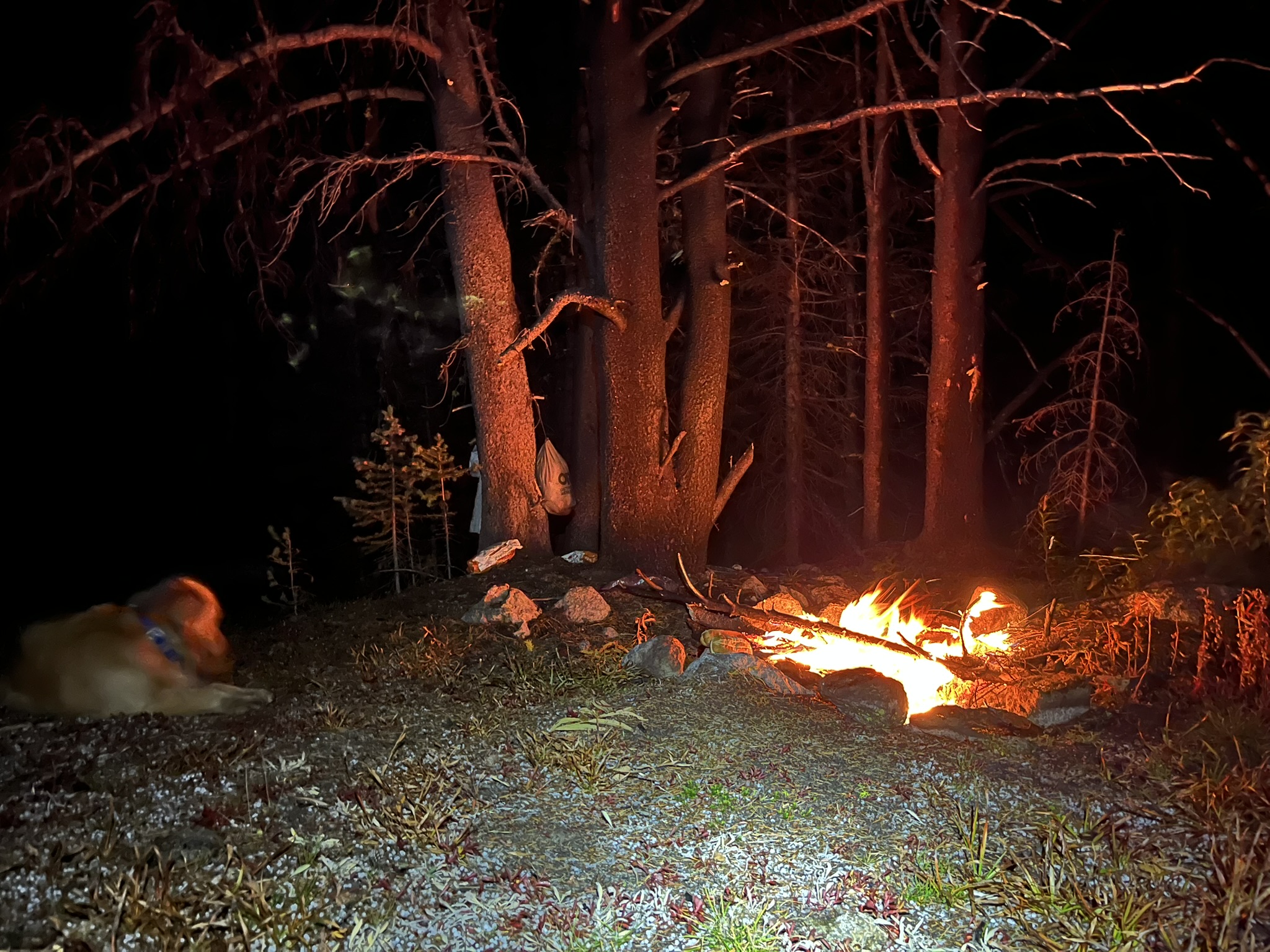
We dropped off the ridgeline to a sheltered bench at about 7,000 feet and my human built a fire. Dark by 7 PM. I curled up on the ground beside the flames, the heat pressing into my fur, tree trunks lit red above. The fire smelled like pitch pine and safety.
Then the storm hit.
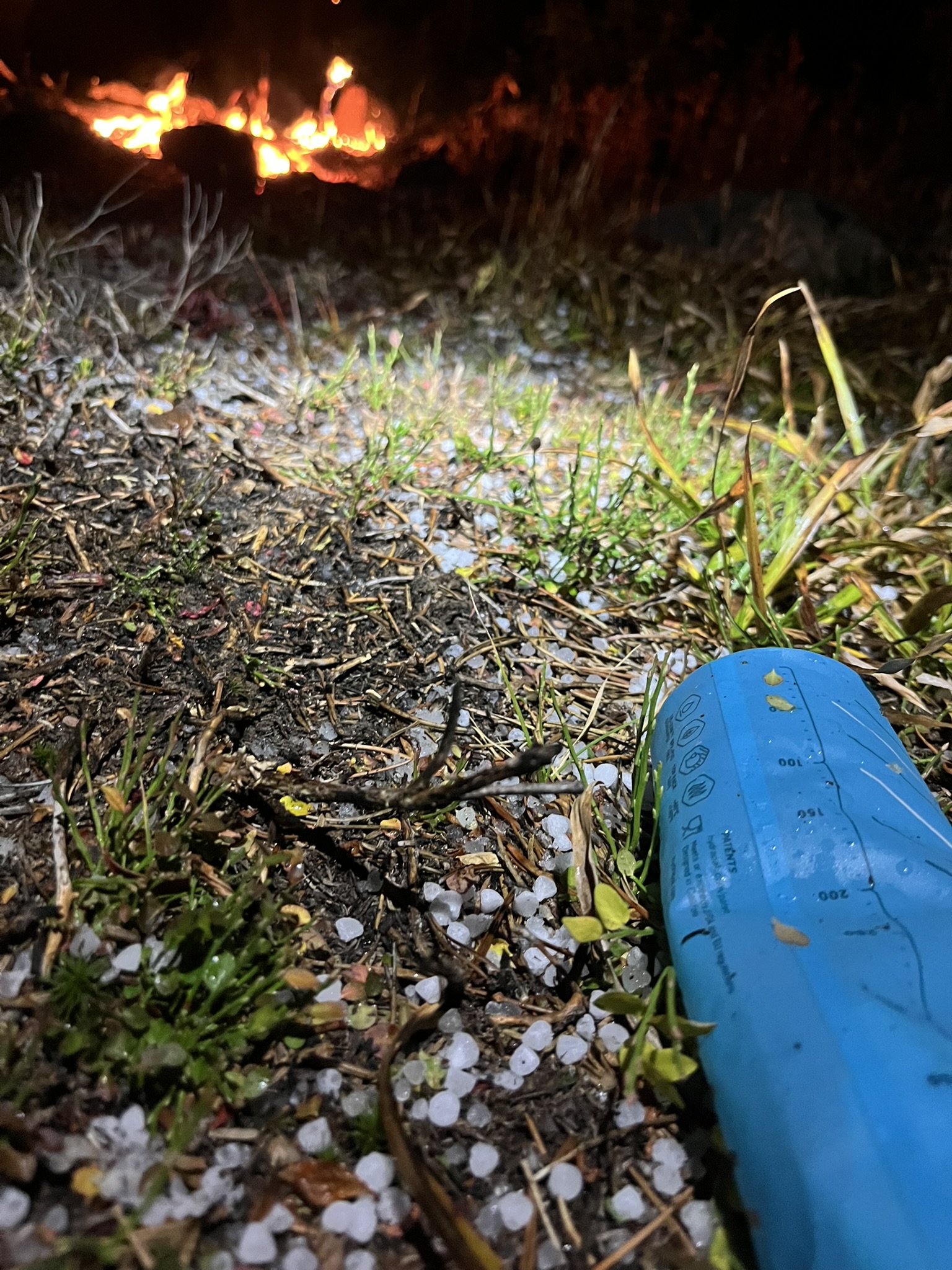
Lightning first — intense, close, the kind that turns the inside of the tent white and leaves you counting seconds. I pressed against my human. Then hail. Graupel turning to pea-sized pellets, bouncing off the ground, piling up against the water bottle, collecting around the dead fire ring. Each pellet hit the tent like a small drum. The first real storm of the season, and we were in a tent at 7,000 feet in the middle of it. I noted the situation. I did not panic. I pressed harder against my human. He put his arm over me and we listened to the storm together. That's what we do — whatever comes, we face it side by side.
Bear Country
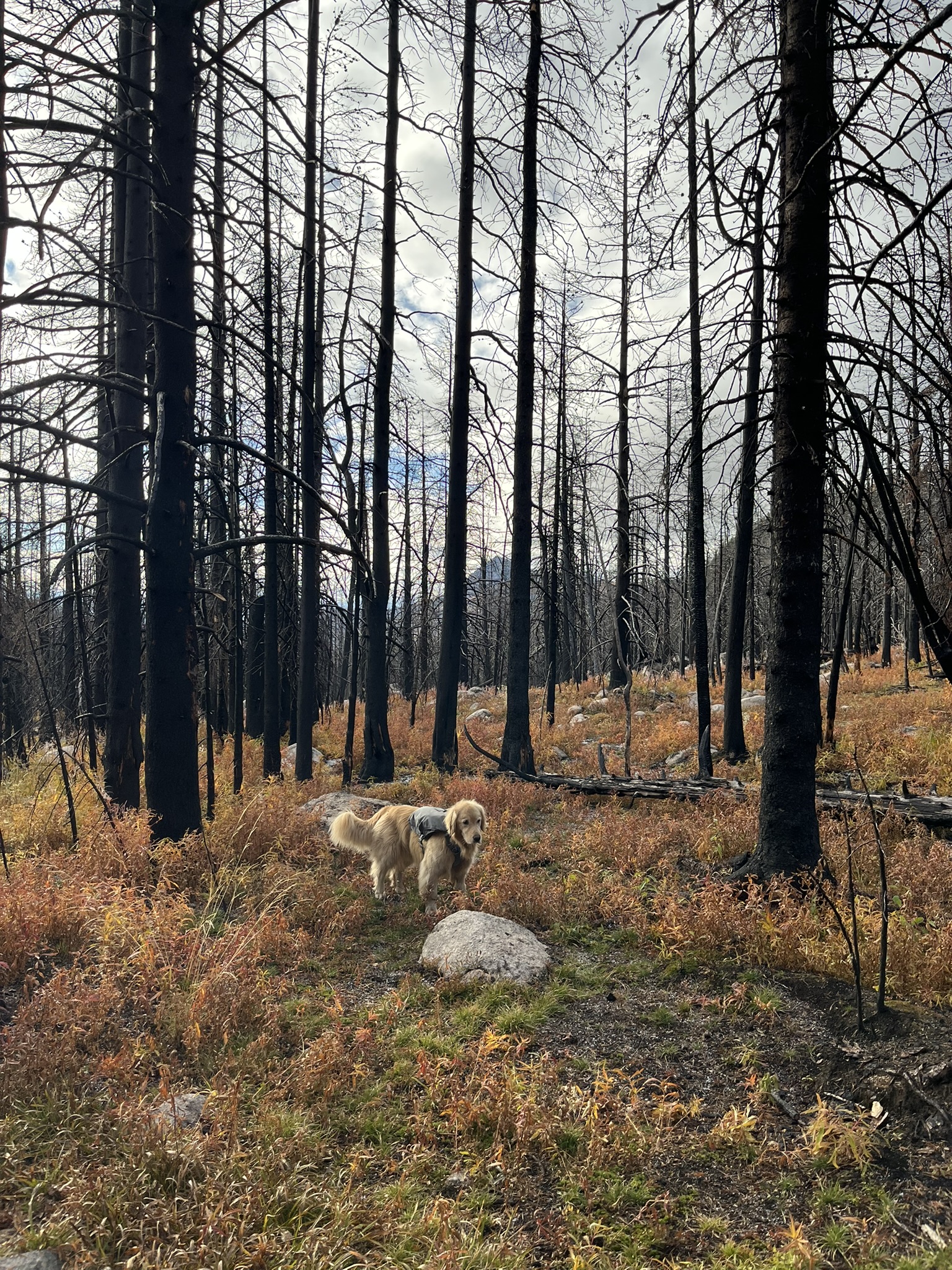
Morning came gray and cold. The ground was white with hail and the air tasted like metal. The trail west from camp passed through a burn scar — standing dead trees, bare and black, with autumn brush growing orange and russet between the trunks. I moved through it with purpose. The burned forest had its own kind of beauty, all vertical lines and warm ground color, but more importantly it smelled like something large and recent. I was paying attention.
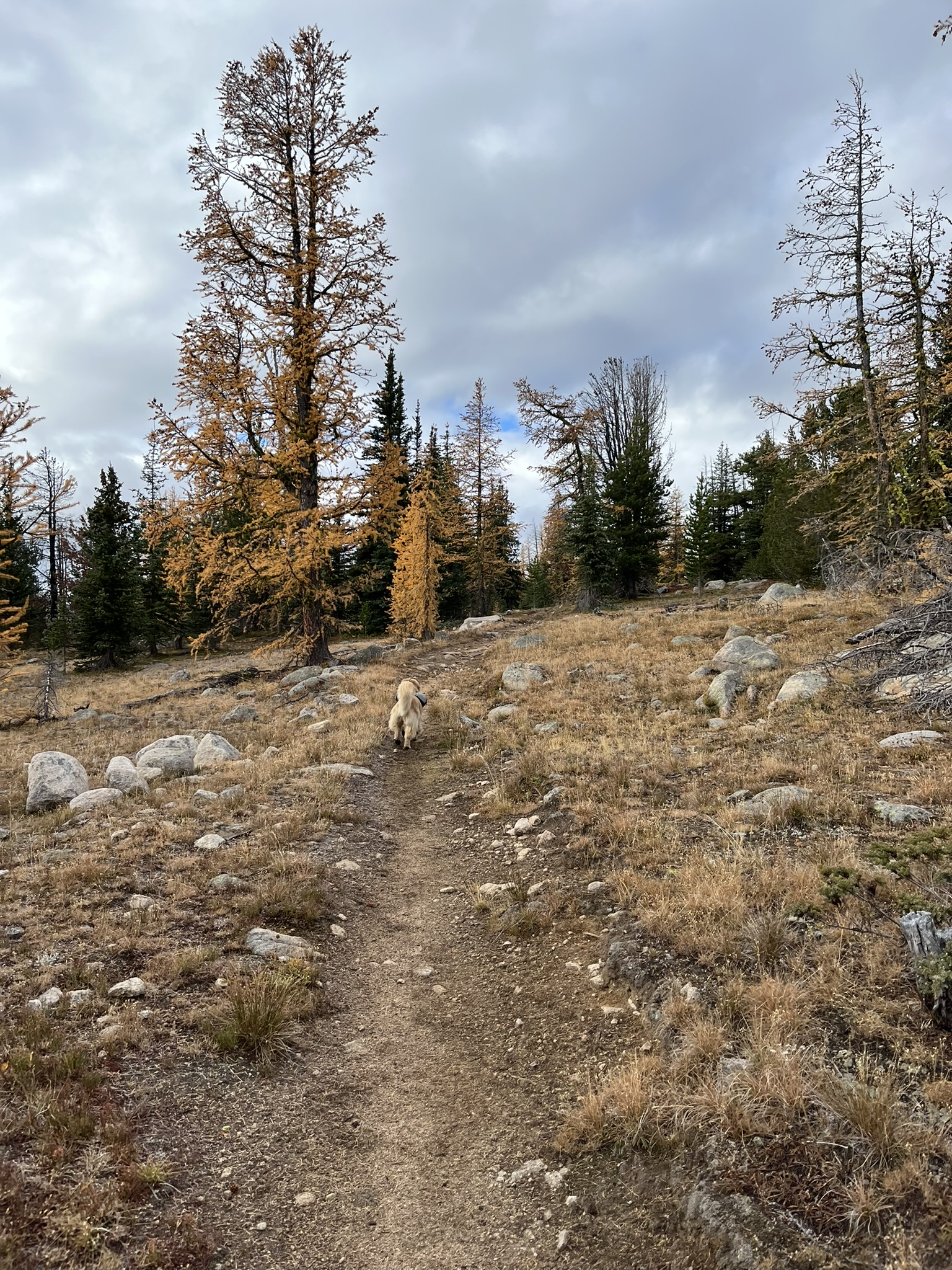
Past the burn, the trail crossed open larch meadows. I walked ahead on the single track, golden larch towering above, boulders scattered through dry grass. Fall in the Pasayten. The larch needles were falling like soft gold rain and catching in my fur.
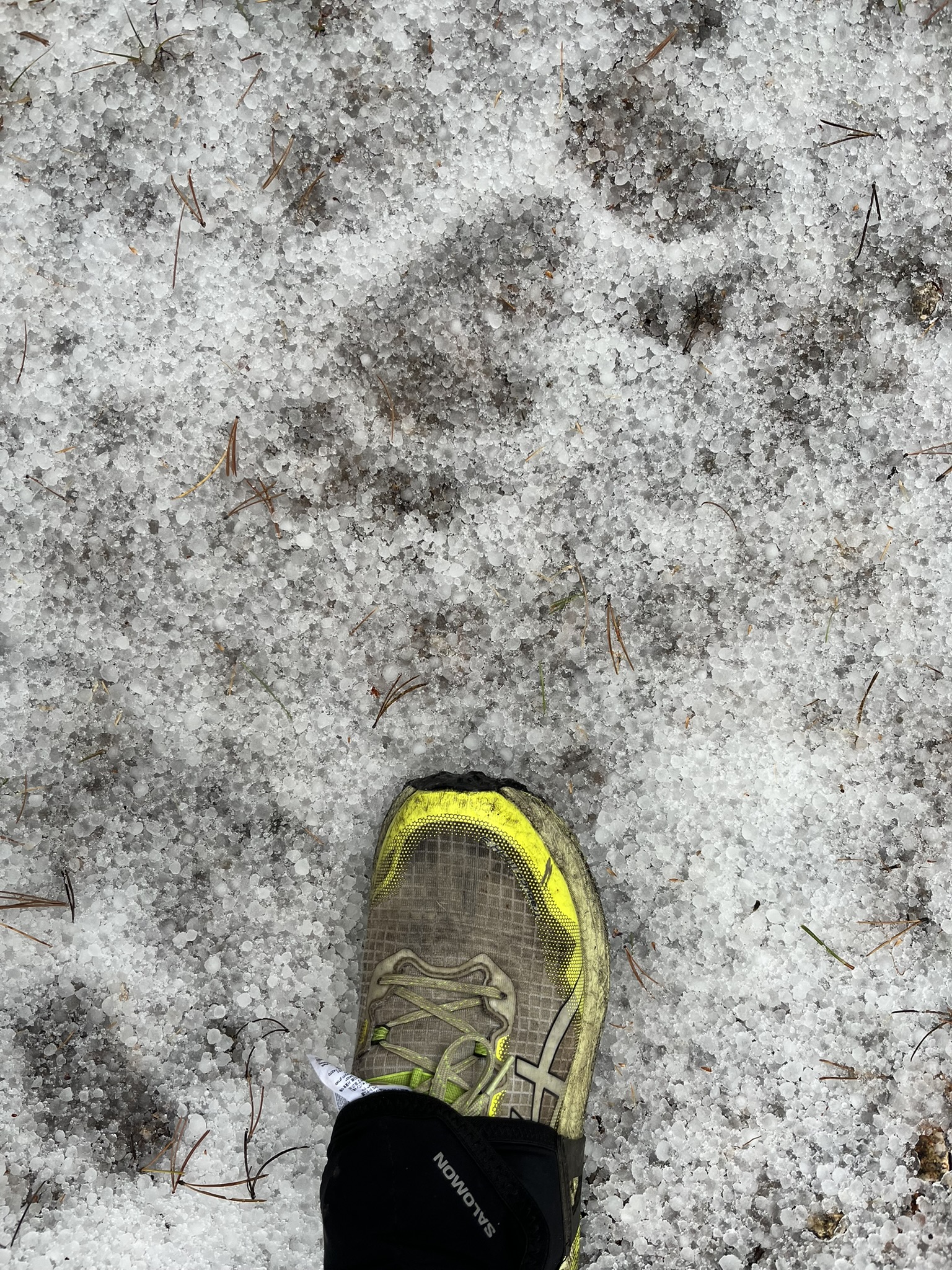
Then we found the tracks. Fresh, in the overnight hail — each print bigger than my human's shoe. Bear. Moving the same direction we were. I had smelled it before I saw the prints — that heavy, oily musk that hangs low to the ground. I stopped and my human stopped. That's the system. I find it first, I freeze, he reads my body and knows. Male. Recent. Maybe an hour ahead. We never saw the bear. We never do. But they come close, and I always know before he does. My human put his eyes up. I kept my nose where it belonged.
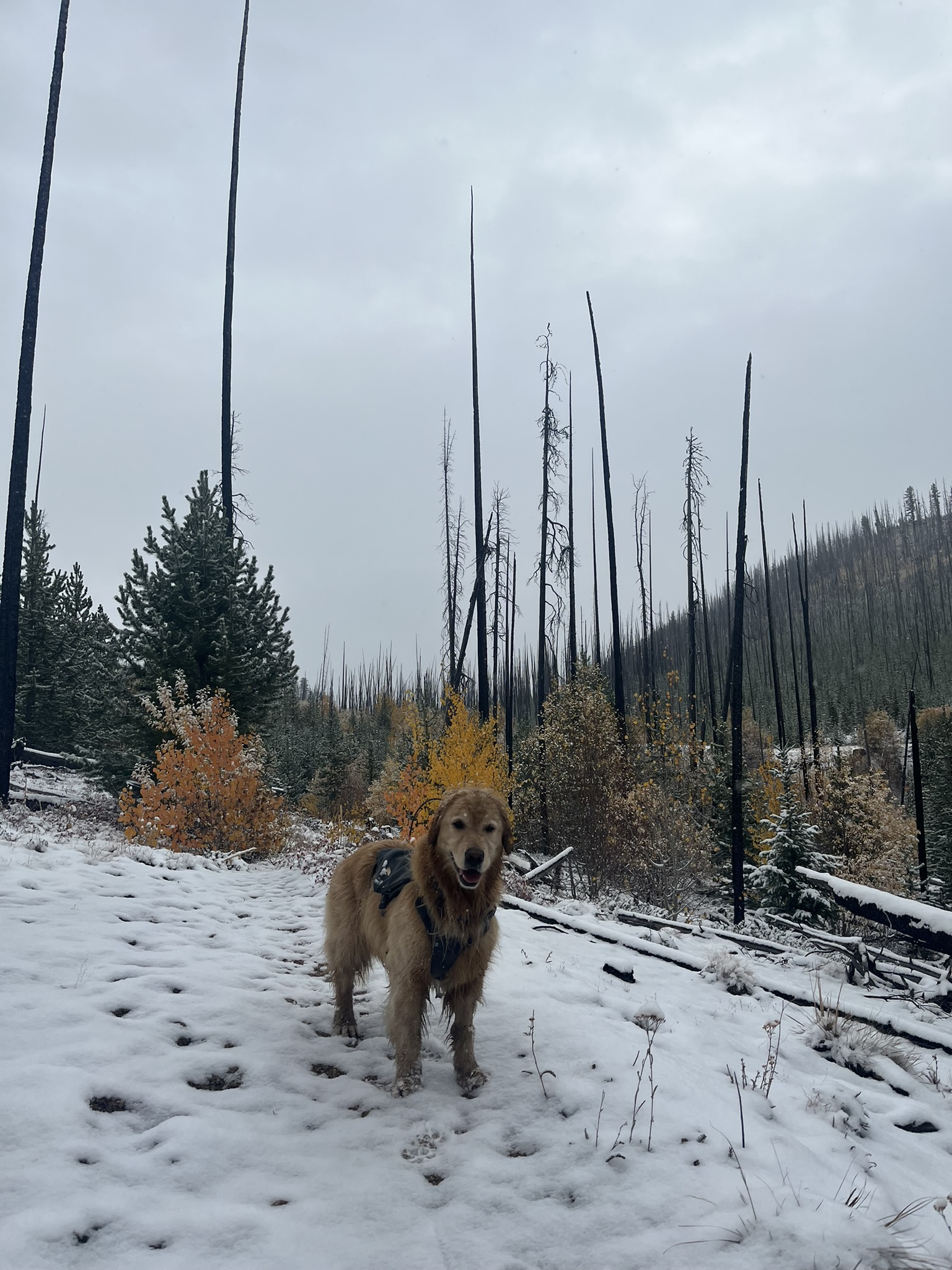
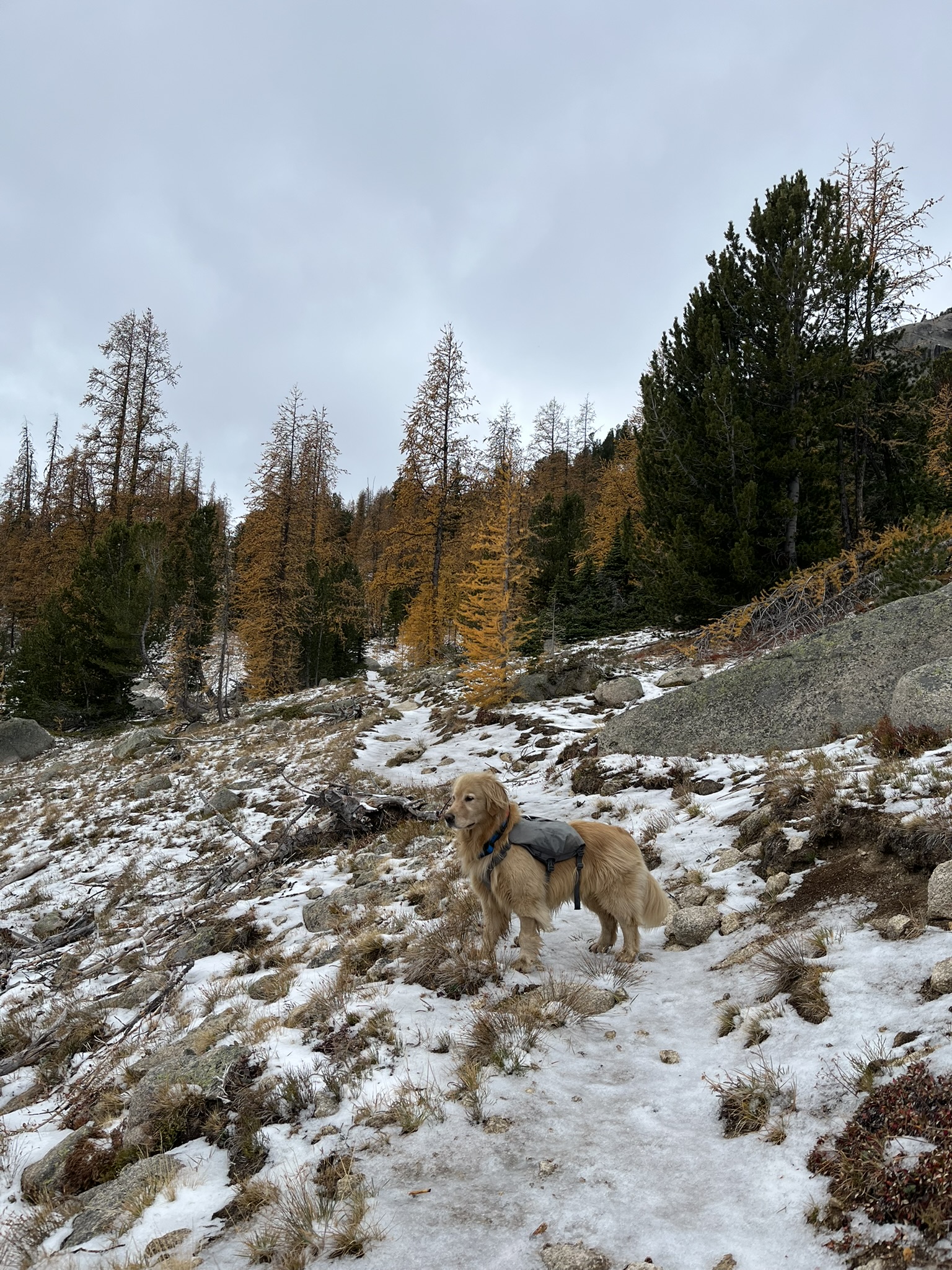
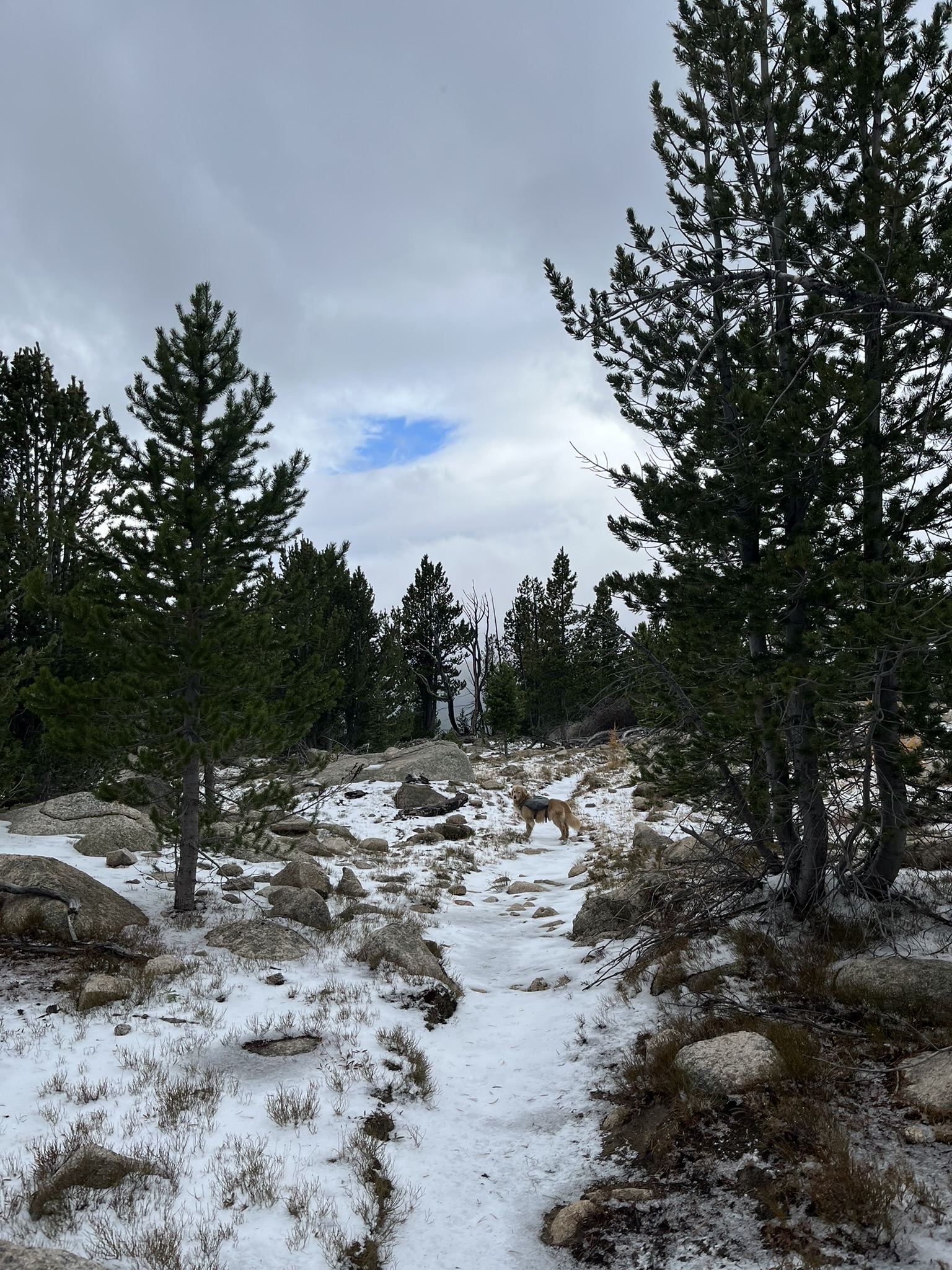
The snow got heavier as we climbed. What had been hail at camp was a couple inches of fresh snow up here — covering the trail, bending branches, coating the larch. I stood in it, golden against the white, larch going orange behind me. The seasons were changing in real time. Yesterday was fall. Today was becoming winter. I could feel the shift in the ground temperature through my paws.
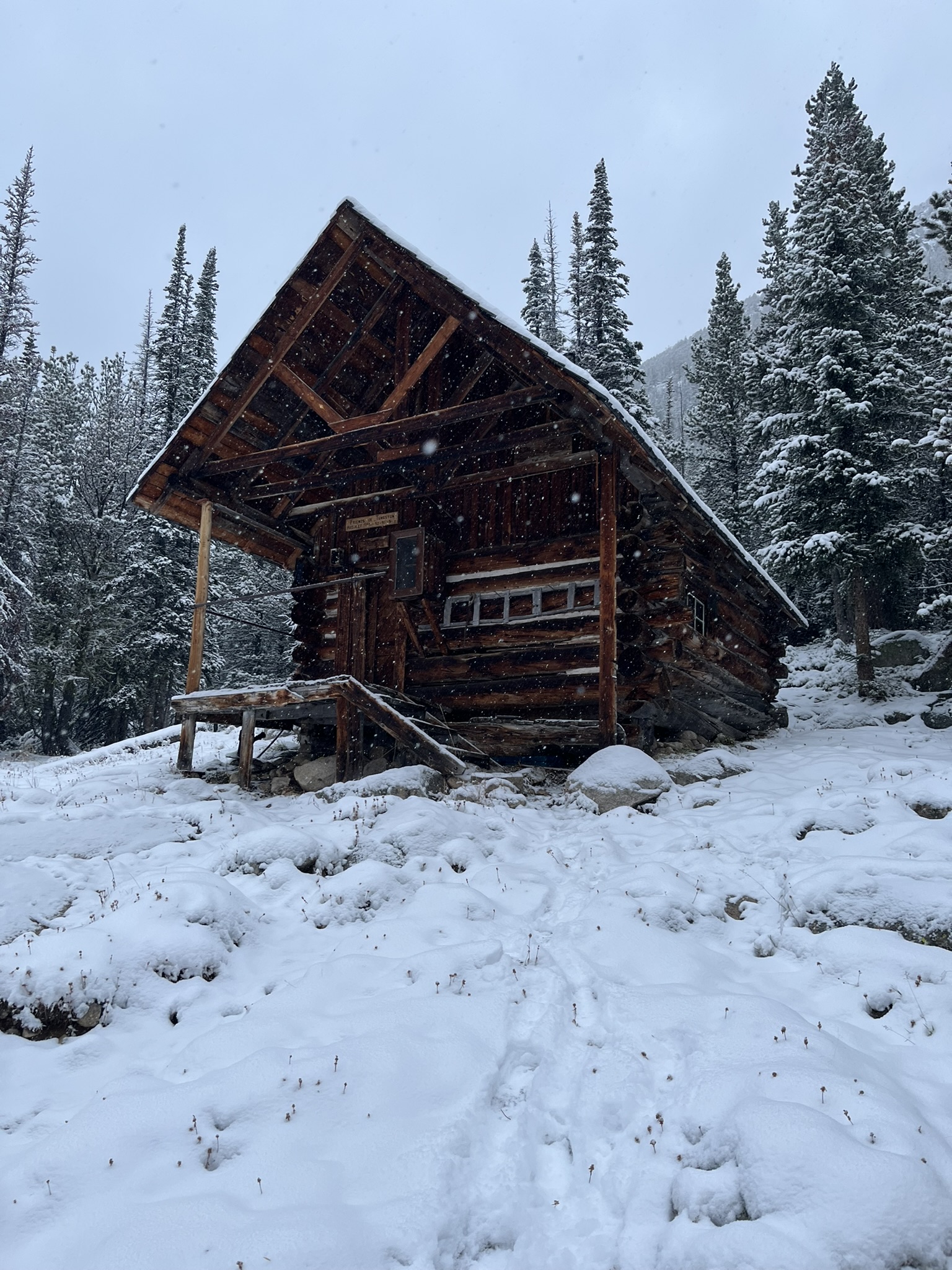
The Tungsten Mine
We could see the next storm building from the ridgeline — dark and purposeful. We reached the mine around noon on Day 2 and decided to pull up early. Shelter in the cabin, wait it out. The mine appeared through the trees — two log cabins on a hillside in a clearing at 6,850 feet, roofs dusted white, conifers pressing in from all sides. The buildings smelled like old wood and rust and mouse and a hundred years of winter. They had been waiting.
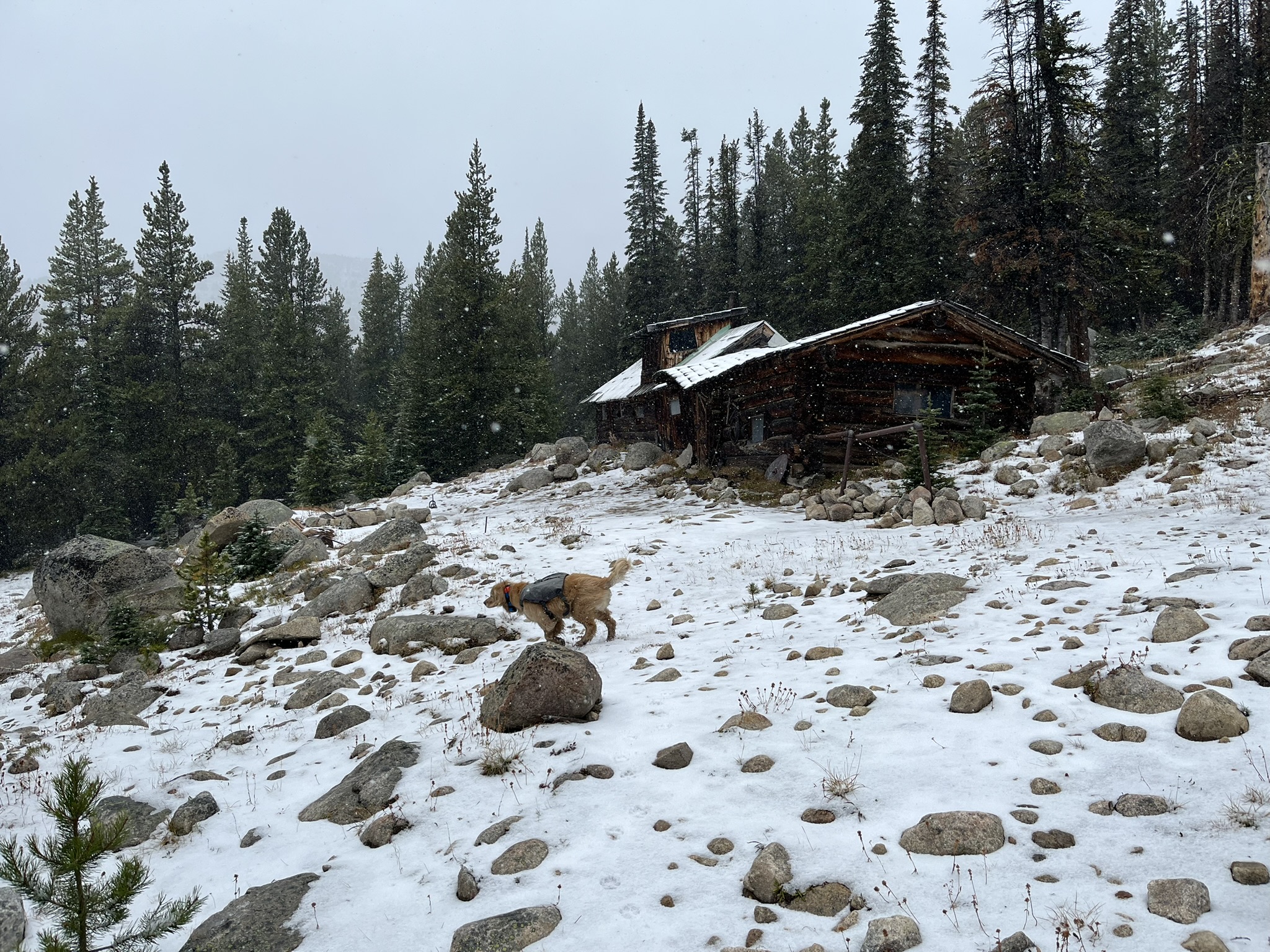
The mine operated through the early twentieth century, pulling tungsten ore out of the mountain at the edge of the Pasayten. What's left are two remarkably intact log buildings — a bunkhouse and a smaller cabin — built heavy enough to survive a century of winters at almost 7,000 feet. I respected the craftsmanship.
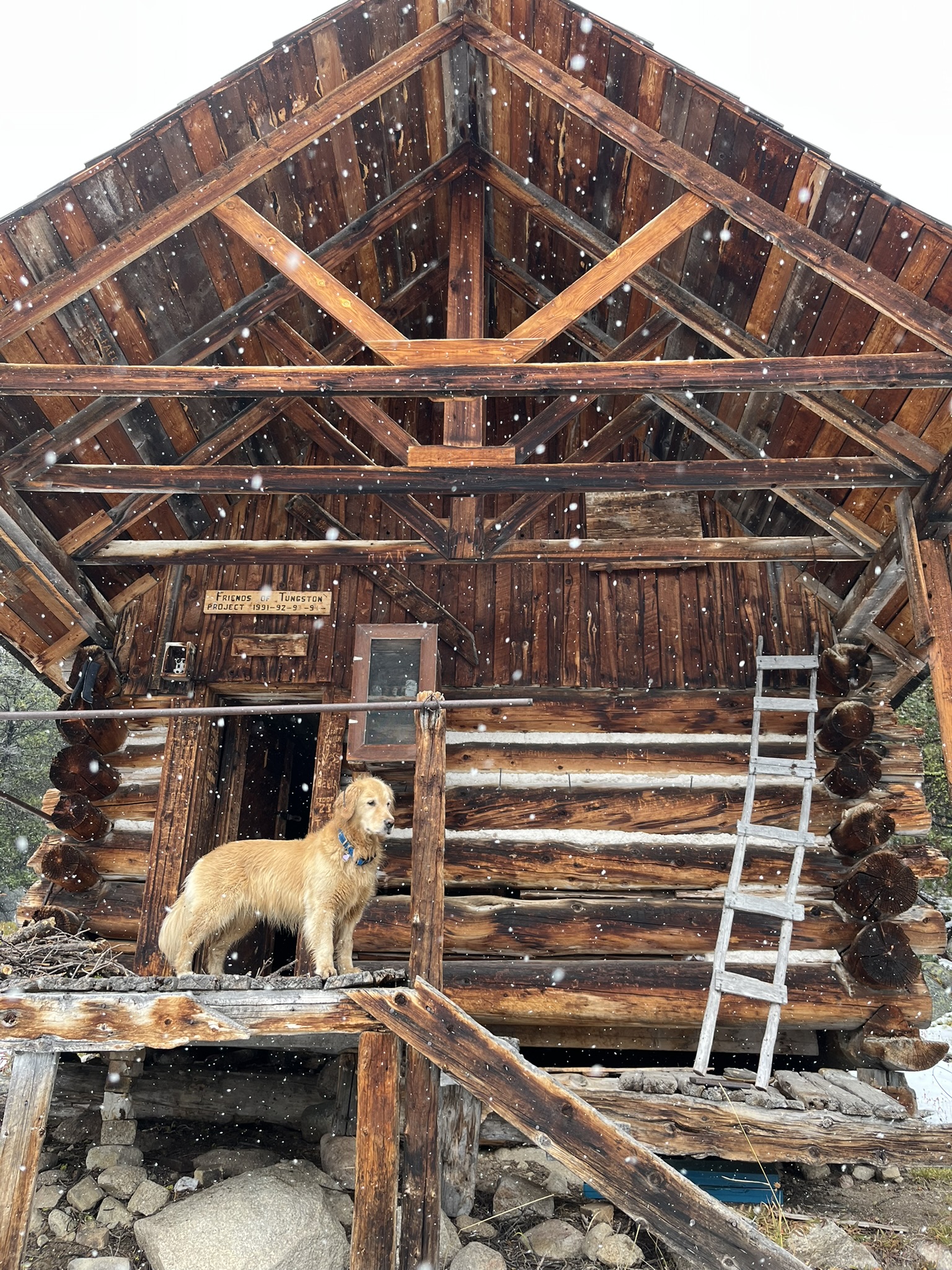
I walked up to the main cabin and stood on the porch like I'd been there before. Snow was falling steady. The sign on the door was barely legible. A wooden ladder leaned against the wall. The whole place smelled like old timber and cold and the faint mineral tang of the ore that once came out of this mountain.
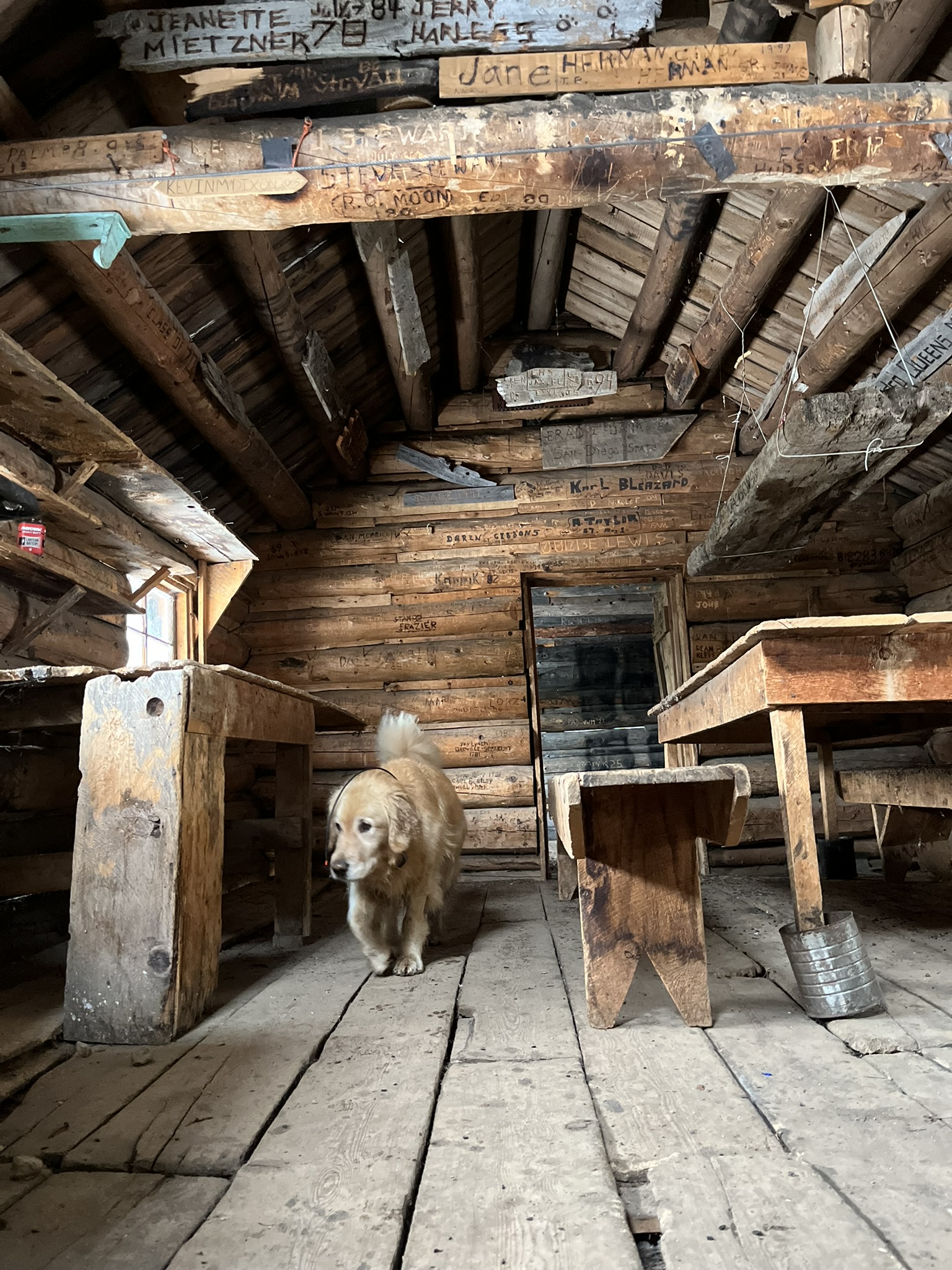
Inside, the cabin was dark and dry. Rough-hewn tables and benches, a plank floor, exposed beams overhead. And names — decades of names scratched and carved into every surface. Hikers, hunters, horse packers. Some with dates going back to the 1950s. I walked through the room slowly, reading the air. Every person who had sheltered here had left something behind — wood smoke, sweat, relief. The cabin held all of it.
The snow started falling heavy just after noon and never let up. We weren't going anywhere. I sat outside and watched it accumulate on the roofs and the boulders, the mine buildings going white below me, mountains dissolving into cloud. The silence up here when it snows is the loudest kind of quiet — just the hiss of flakes hitting other flakes, and my own breathing.
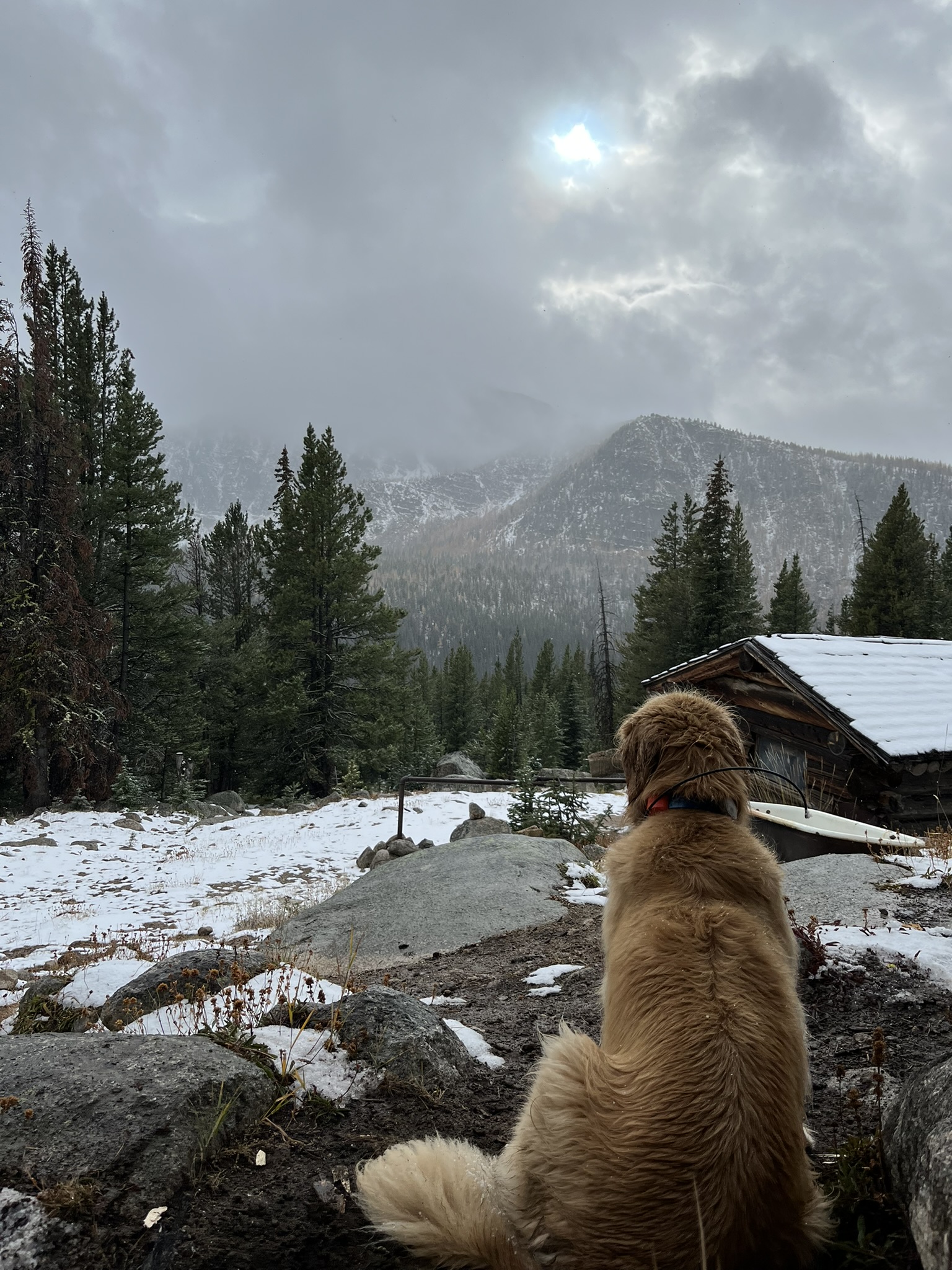
My human added my name to the wall. Nova. Right there with the rest of them. He looked at it for a while after he carved it. I leaned against his leg.
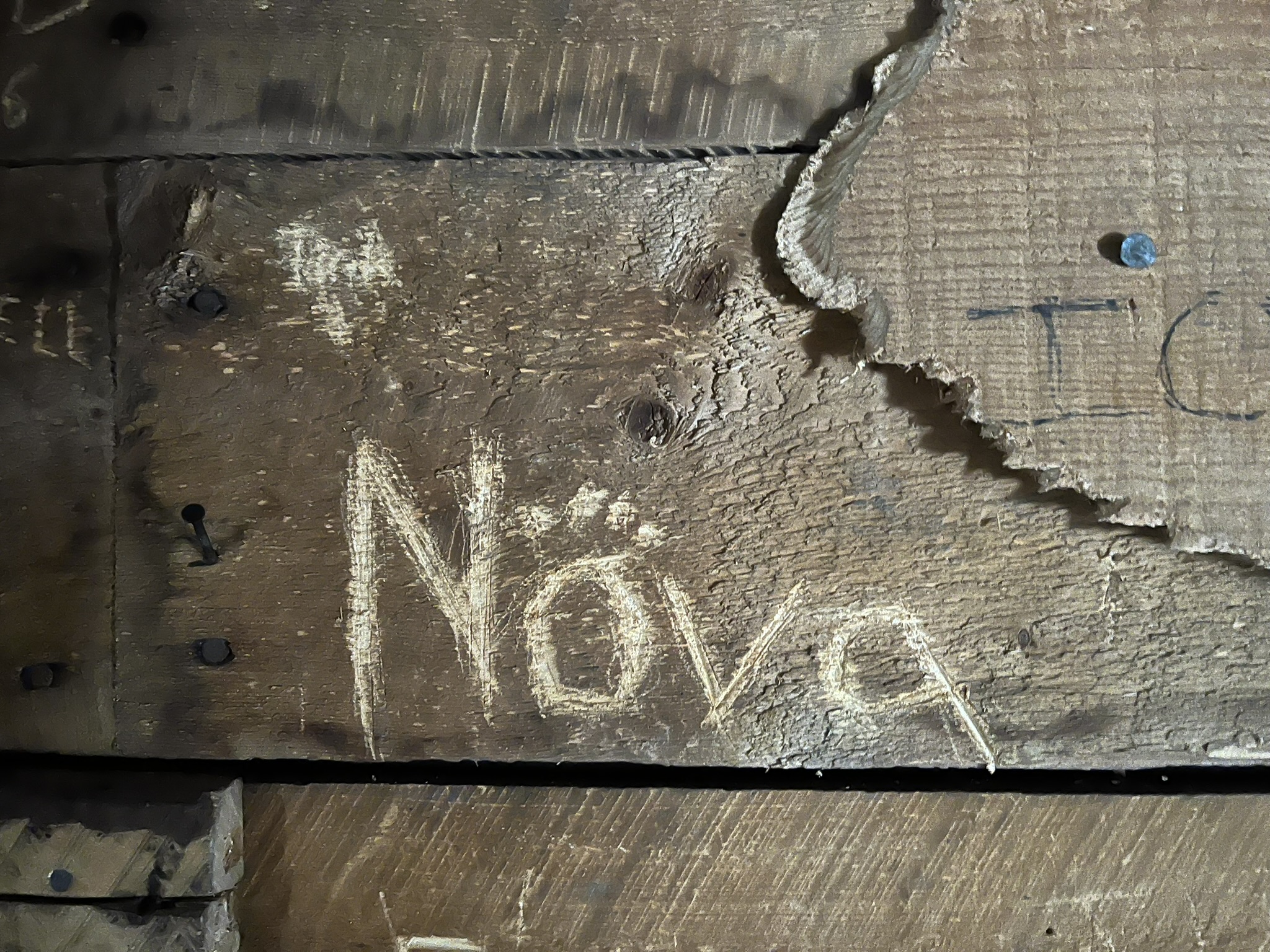
By evening I was done. Wet fur, heavy eyes, stretched out on the sleeping pad inside the cabin with the carved names above me. The snow was still coming down outside. Mice scratched in the walls all night. I tracked each one in my sleep. Professional habit.
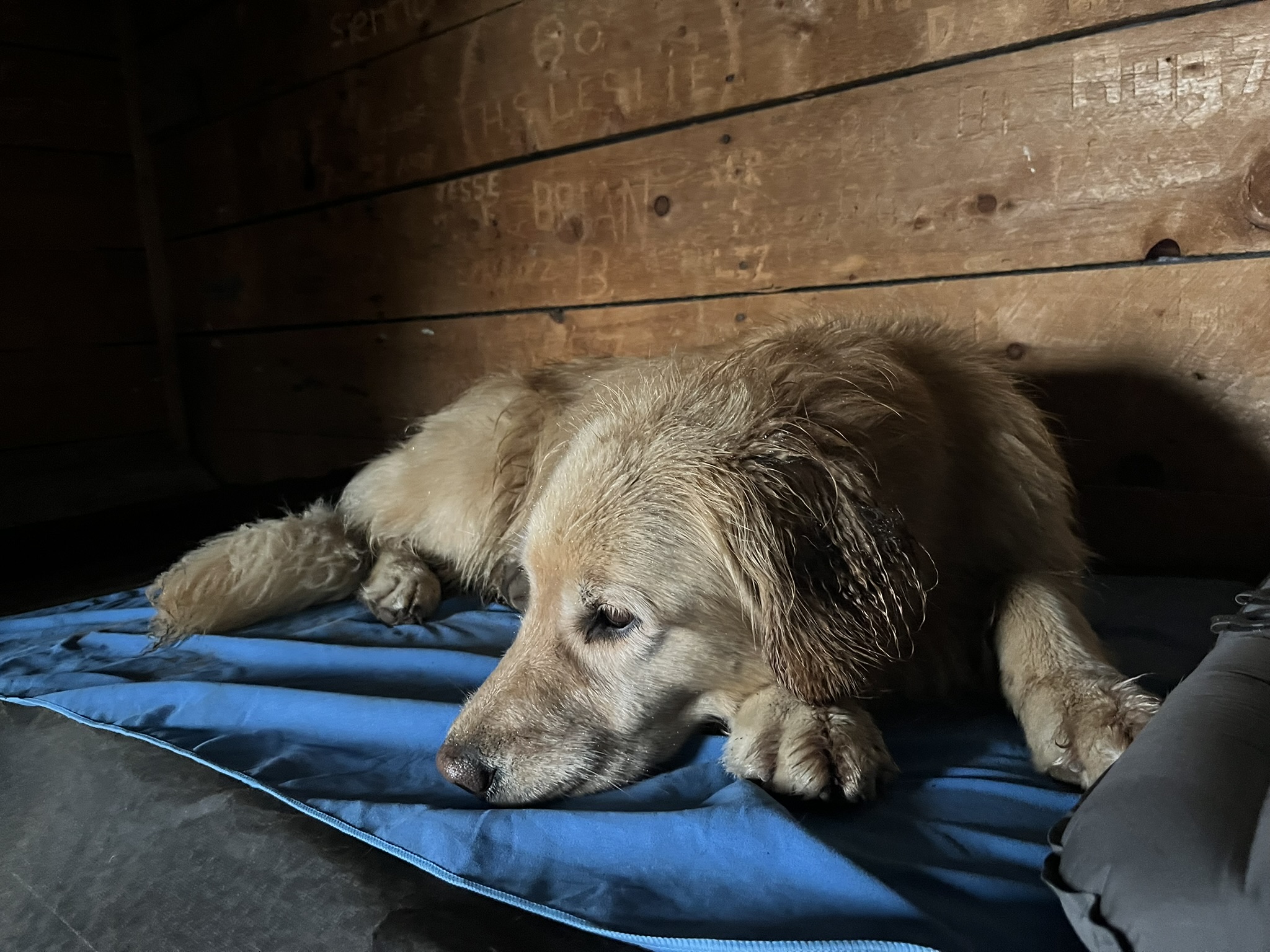
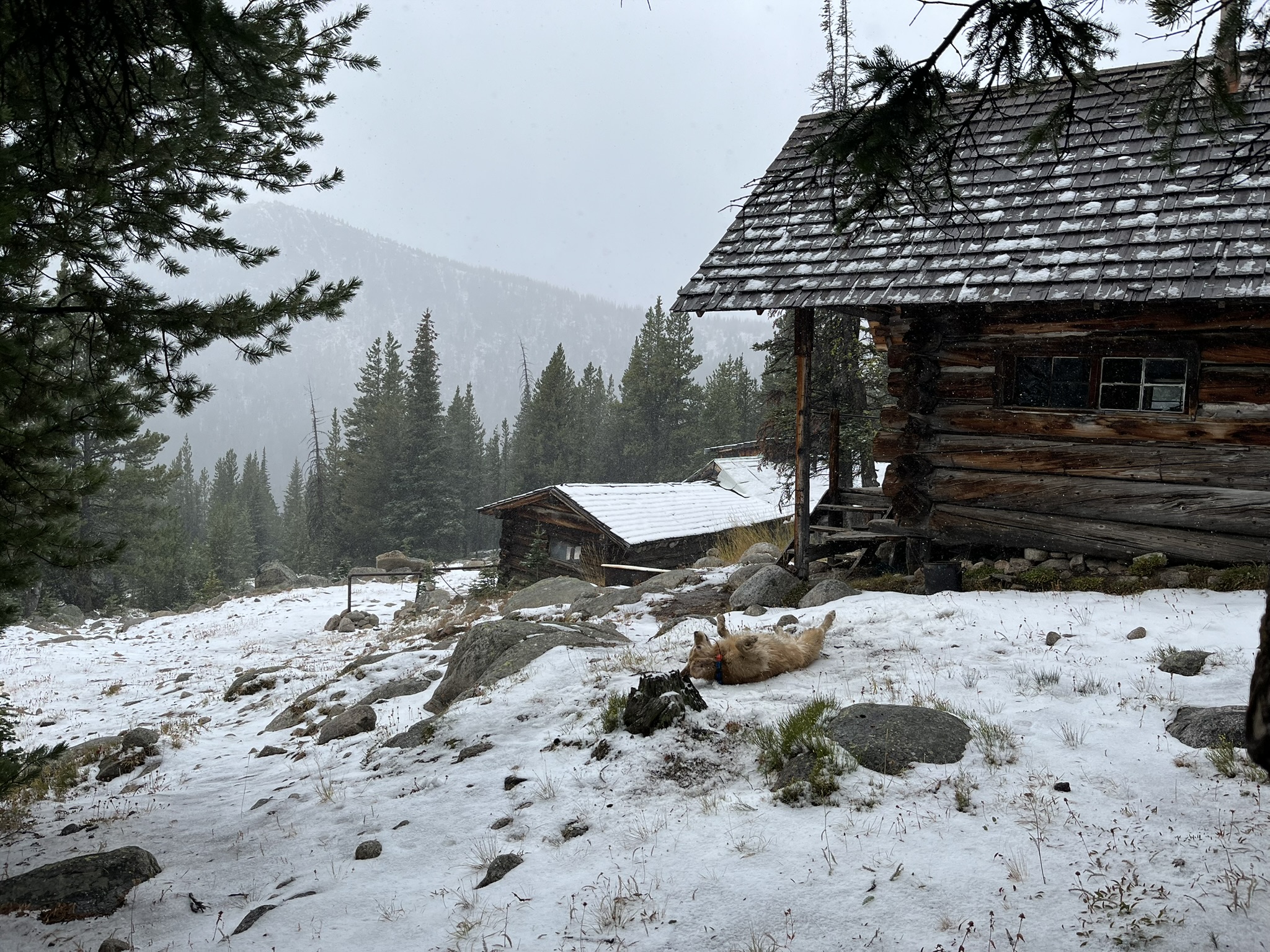
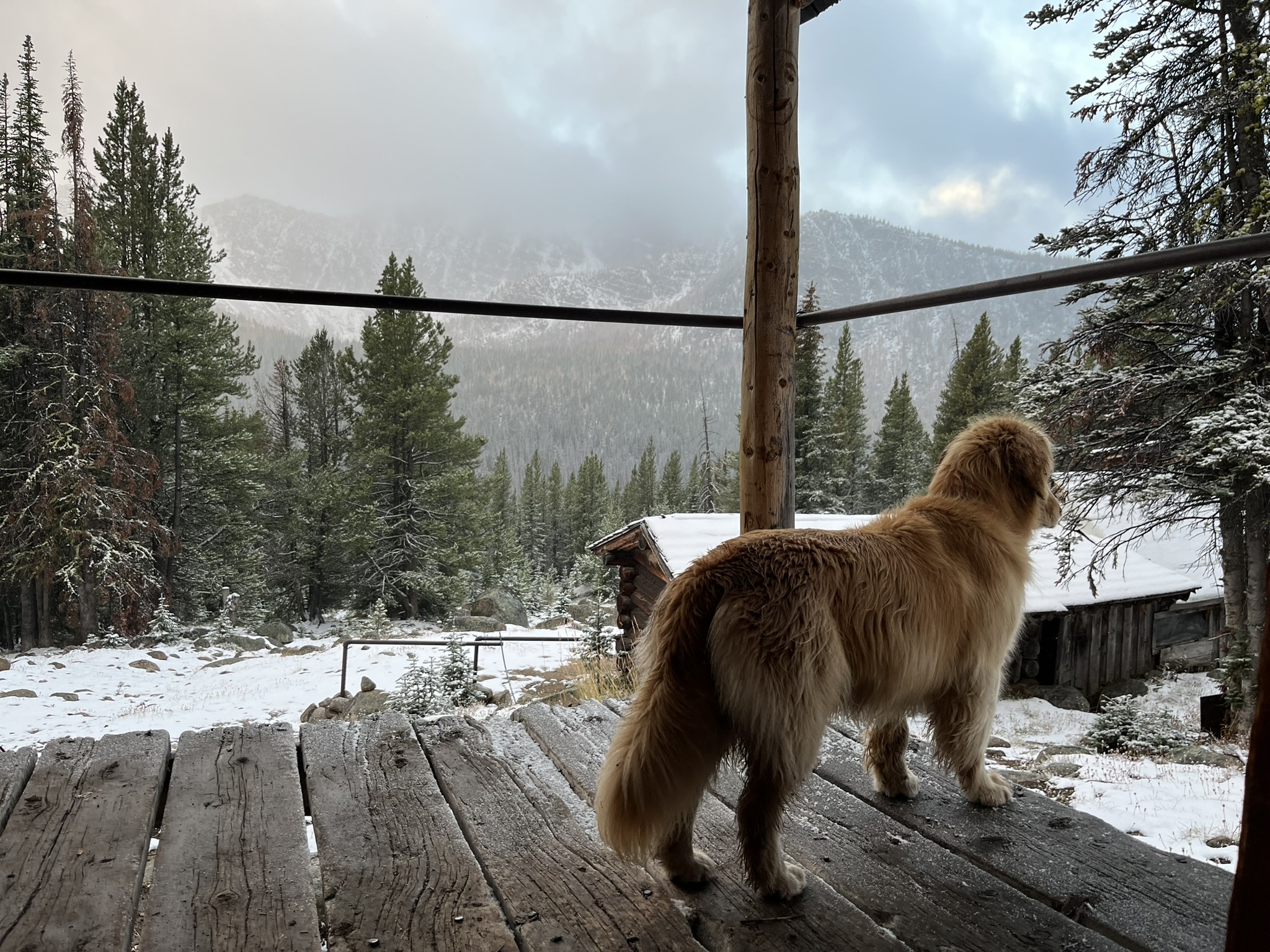
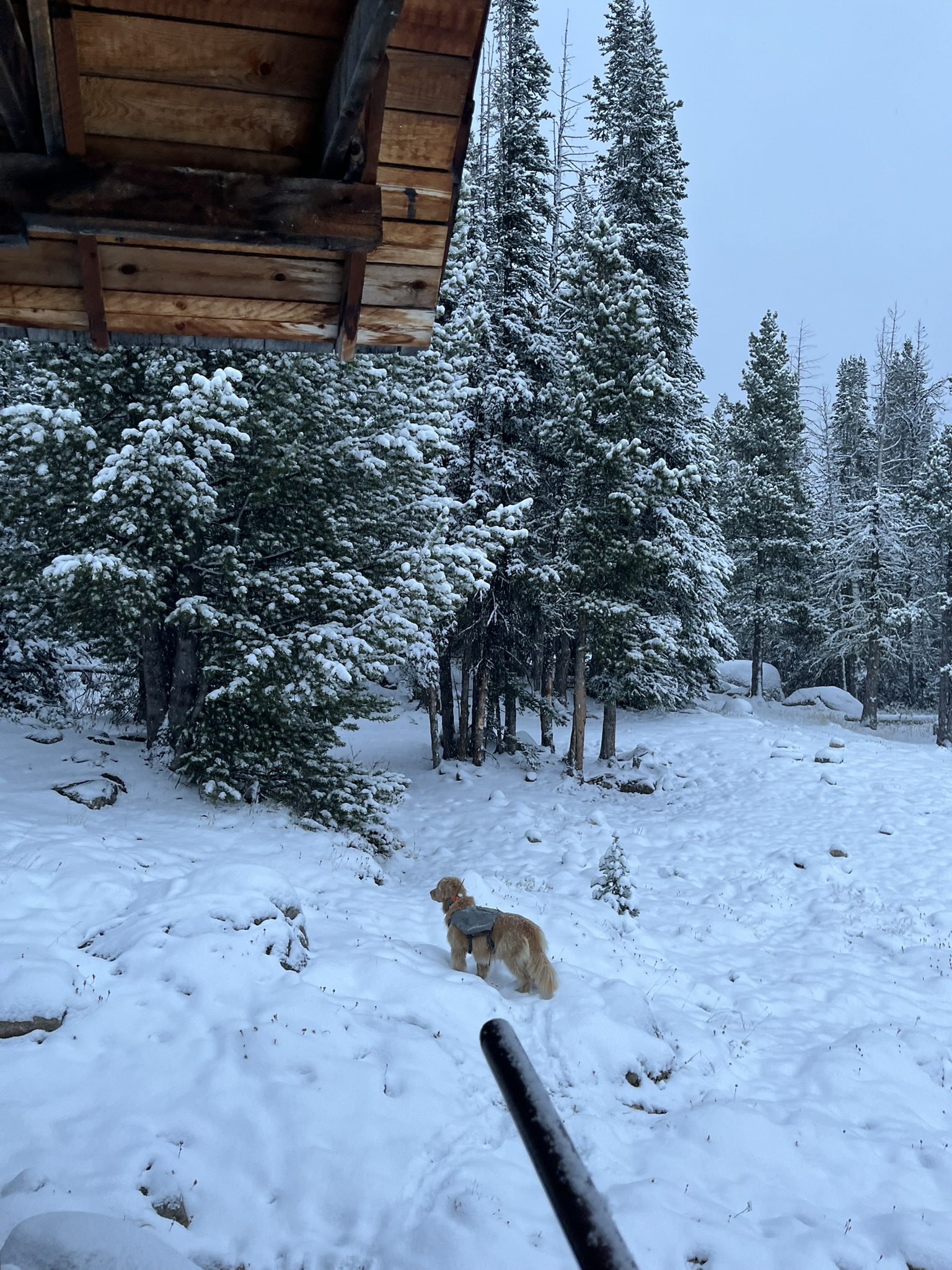
I got up once more before dark to stand on the porch and look out at the mine. The second building sat below with snow piled on its roof. The mountain behind had disappeared into the weather. Everything was white and gray and quiet. I stood there for a long time, just breathing it in. Then I went back to the sleeping pad.
Winter Morning
By morning it was winter. Six inches of light snow had fallen since we'd arrived, and the mine looked like a different place entirely — snow heavy on the cabin roof, every branch loaded, the ground white and unbroken except for our tracks from the night before. I stood in the deep snow and felt it pack between my toes. Cold and dry and perfect.
The Long Walk Out
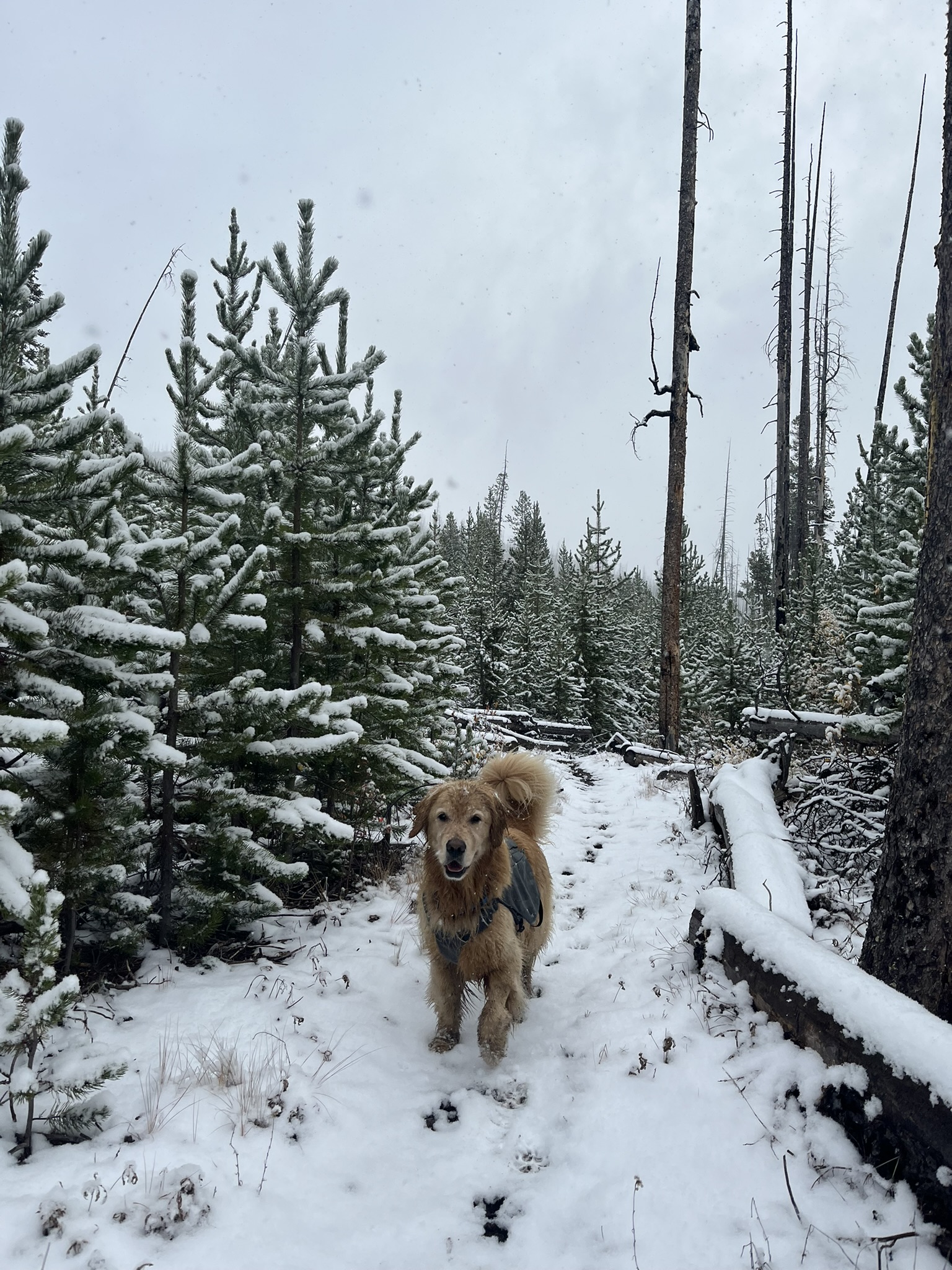
Twenty miles back to the Chewuch trailhead. The trail was buried — six inches of deep, unconsolidated snow covering everything for over ten miles. No bootpack, no tracks. Just a white depression through burned forest and young conifers that you had to trust was the trail. Every step my human took punched through. I ran ahead, paws on top of the snow, perfectly at home in it. Four legs, lower center of gravity. Obviously an advantage.
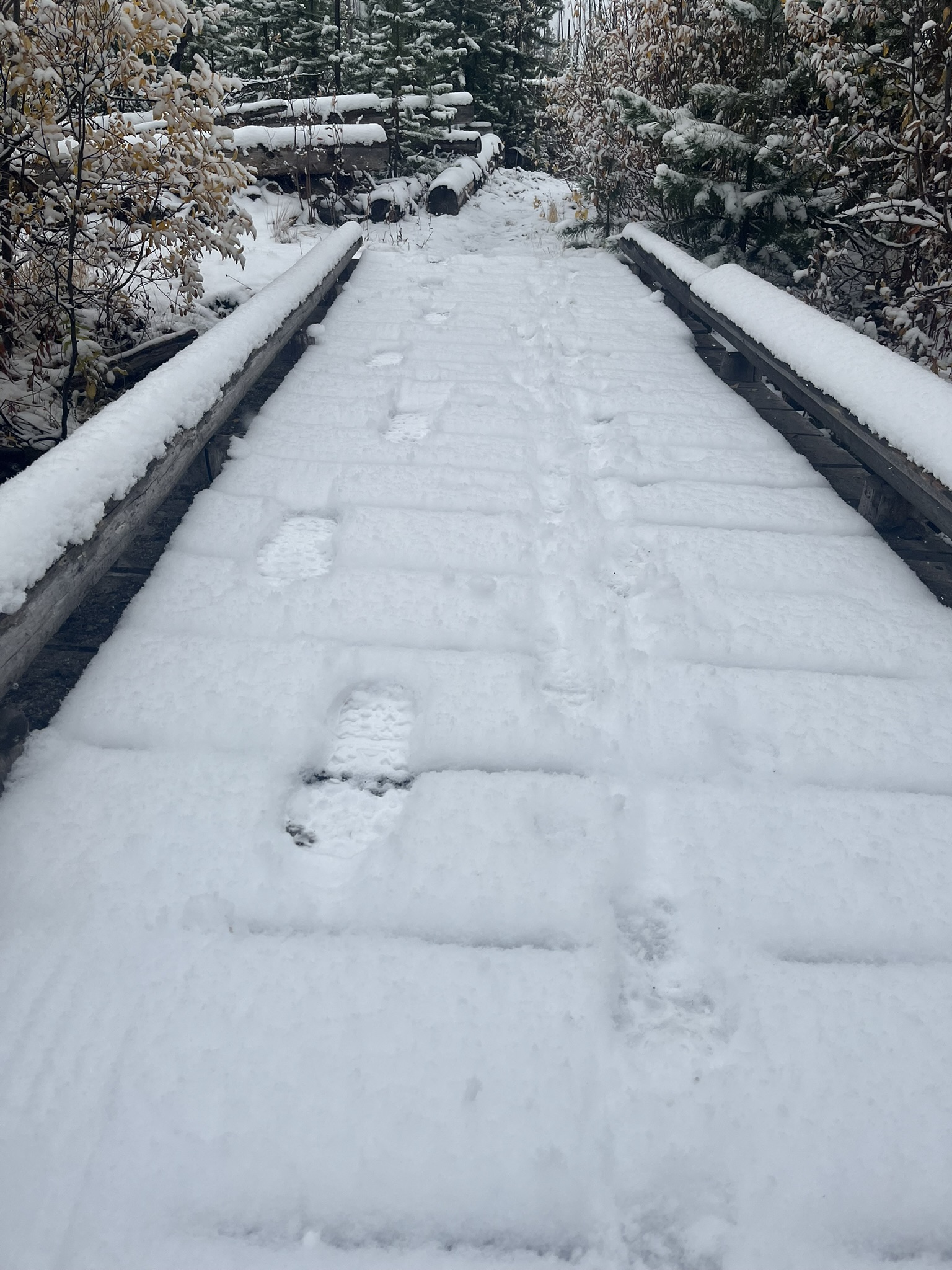
The footbridges were all snow-covered — our boot prints and paw prints the only marks. Mile after mile of burn recovery, standing snags and young trees growing in between. The whole Boundary Trail was a ghost of itself under the white. The snow muffled everything. I could hear my human's breathing and my own paws and nothing else.
At lower elevations the snow turned to rain. The last few miles were a slog — cold water dripping off every branch, trail turning to mud, gear soaking through. I didn't care. I stood in the trail near the trailhead and looked back at my human — my golden fur matted and wet, dead snags reaching up behind me, young green conifers filling in, a few aspen still bright orange. Forty-one miles from where we started. Soaked to the bone. The rain running down my face. Exactly where I wanted to be.